How Shockwave Therapy Helps Treat Long Standing Shoulder Injuries
Understanding Why Shoulder Injuries Become Long Lasting
Shoulder pain can begin with a simple strain, repetitive movement, sports injury, or even poor posture, but it often becomes much more difficult to manage when it is ignored or repeatedly aggravated. Many people continue with their daily routines despite discomfort, allowing inflammation, tissue damage, and movement restrictions to worsen over time. As months pass, the affected tendons and muscles may lose their ability to heal efficiently, leading to stiffness, weakness, and persistent pain. Long standing shoulder injuries can interfere with work, exercise, sleep, and even basic tasks such as reaching overhead or lifting everyday objects. While pain medications and temporary rest may provide short term relief, they often do not address the underlying tissue changes responsible for ongoing symptoms. At Coastal Sports And Wellness, we believe that identifying the root cause of chronic shoulder pain is the first step toward achieving meaningful and lasting recovery.
Why Chronic Shoulder Injuries Are Difficult to Heal
Unlike acute injuries that benefit from the body’s natural healing response, chronic shoulder conditions often develop because damaged tissues remain in a prolonged state of incomplete repair. Reduced blood flow to tendons, repetitive strain, scar tissue formation, and altered shoulder mechanics all contribute to delayed healing. Over time, people may unconsciously change the way they move to avoid pain, creating additional stress on surrounding muscles and joints. This compensation can lead to reduced shoulder stability, limited mobility, and increasing discomfort during routine activities. The longer these conditions remain untreated, the more difficult they may become to resolve with conventional methods alone. That is why modern treatment approaches increasingly focus on stimulating the body’s own regenerative processes rather than simply masking pain.
Common Shoulder Conditions That May Benefit From Shockwave Therapy
Many chronic shoulder problems involve degeneration rather than active inflammation, making them suitable candidates for regenerative therapies. Conditions such as rotator cuff tendinopathy, calcific tendonitis, shoulder impingement syndrome, biceps tendon irritation, and persistent muscle tightness often respond well when healing mechanisms are reactivated. Athletes, office workers, manual laborers, and older adults can all develop these issues through repetitive stress or age related tissue changes. Symptoms frequently include aching pain, weakness when lifting the arm, restricted range of motion, tenderness, and discomfort during sleep. Because these conditions develop gradually, many individuals adapt to the pain instead of seeking early treatment. A comprehensive assessment helps determine whether shockwave therapy is an appropriate option based on the specific cause of the injury.
What Is Shockwave Therapy and How Does It Work
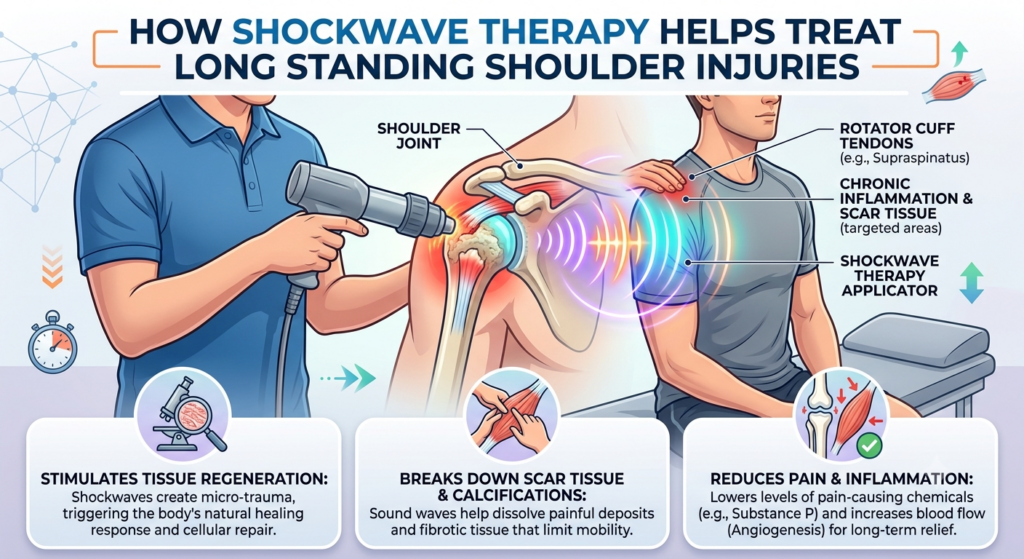
Shockwave therapy is a non surgical treatment that delivers controlled acoustic waves into injured tissues to stimulate the body’s natural healing response. Rather than damaging tissue, these sound waves encourage biological changes that improve recovery in areas that have remained stagnant for extended periods. The treatment promotes increased circulation, stimulates cellular activity, supports collagen production, and encourages the breakdown of unhealthy calcifications that may limit movement. These combined effects help improve tissue quality while reducing pain over time. Unlike treatments that only provide temporary symptom relief, shockwave therapy aims to improve the health of the affected tendon and surrounding structures. As healing progresses, patients often notice gradual improvements in comfort, strength, and overall shoulder function.
Improving Blood Flow to Support Tissue Repair
One of the greatest challenges in chronic tendon injuries is the limited blood supply available to damaged tissues. Healthy circulation is essential because it delivers oxygen, nutrients, and repair cells that are necessary for recovery. Shockwave therapy stimulates the formation of new blood vessels through a process known as neovascularization, improving circulation in previously underperfused tissues. Enhanced blood flow creates a healthier environment where damaged fibers have a greater opportunity to repair themselves. Better circulation also helps remove metabolic waste products that may contribute to ongoing pain and inflammation. As tissue health improves, many individuals experience increased flexibility and reduced discomfort during everyday activities.
Stimulating Natural Healing Without Surgery
The body has an incredible ability to repair itself, but chronic injuries often interrupt this process before complete healing occurs. Shockwave therapy helps reactivate dormant healing mechanisms by stimulating specialized cells involved in tissue regeneration. Fibroblasts become more active, producing collagen that strengthens damaged tendons and improves structural integrity. This renewed repair process helps restore healthier tissue rather than allowing degeneration to continue unchecked. Because the treatment encourages biological healing instead of replacing tissue through surgery, recovery often feels more natural and progressive. Many patients appreciate having a treatment option that supports their body’s own regenerative capabilities while avoiding invasive procedures whenever possible.
Reducing Pain Through Biological Changes
Pain reduction following shockwave therapy is not simply the result of temporary numbing. The treatment influences nerve activity, reduces the concentration of pain related chemicals, and encourages healthier tissue remodeling that addresses the source of discomfort. As damaged tissues begin functioning more effectively, mechanical stress within the shoulder decreases, leading to less irritation during movement. Patients frequently report improvements in both resting pain and pain experienced during lifting, reaching, or athletic activity. Better tissue quality also reduces the likelihood of repeated flare ups that commonly affect chronic shoulder conditions. This gradual reduction in pain allows individuals to participate more confidently in rehabilitation exercises that further improve recovery.
Breaking Down Calcifications That Restrict Movement
Some long standing shoulder injuries involve calcium deposits that develop within tendons, particularly in cases of calcific tendonitis. These deposits can significantly restrict shoulder movement while causing sharp pain during certain activities. Shockwave therapy has been shown to encourage the gradual breakdown and reabsorption of these calcifications, allowing tendons to move more freely. As the deposits decrease, surrounding tissues experience less mechanical irritation during shoulder motion. Patients often notice improvements in flexibility alongside reductions in pain and stiffness. Addressing these calcifications can restore more natural shoulder mechanics and improve overall function without the need for surgical removal in many cases.
Supporting Rehabilitation and Functional Recovery
Successful treatment of chronic shoulder injuries involves more than reducing pain alone. Restoring normal movement patterns, rebuilding strength, and improving joint stability are equally important for preventing future problems. Shockwave therapy is frequently combined with individualized rehabilitation exercises that strengthen the rotator cuff, improve posture, and enhance shoulder coordination. As discomfort decreases, patients are better able to participate fully in these therapeutic exercises without excessive pain limiting their progress. Consistent rehabilitation helps reinforce healthier movement patterns while protecting healing tissues from additional strain. At Coastal Sports And Wellness, we integrate evidence informed rehabilitation strategies with advanced treatment options to help patients achieve more complete and lasting recovery.
What Patients Can Expect During Treatment
A shockwave therapy session typically begins with an assessment of the painful area to accurately identify the tissues requiring treatment. A handheld device delivers controlled acoustic waves to the affected region while the intensity is adjusted according to individual tolerance and clinical goals. Most sessions are relatively brief, allowing patients to return to many of their normal daily activities afterward. Some mild soreness may occur for a short period as the healing response begins, but this is generally temporary. Improvements often develop gradually over several weeks as tissue remodeling continues between treatment sessions. Every patient’s recovery timeline depends on the severity of the injury, overall health, and commitment to the recommended rehabilitation program.
Who May Be a Good Candidate for Shockwave Therapy
People experiencing shoulder pain that has persisted for several months despite rest, medication, or conventional therapy may benefit from further evaluation for shockwave therapy. Athletes hoping to return to sport, office workers dealing with repetitive strain, and physically active adults with chronic tendon injuries are often appropriate candidates. Individuals who wish to avoid surgery or reduce reliance on long term pain medication may also find this treatment appealing. A thorough clinical examination remains essential because not every shoulder condition responds to the same treatment approach. Factors such as the specific diagnosis, injury duration, overall health, and activity level all influence the most appropriate treatment plan. Careful assessment ensures that therapy is matched to each person’s unique needs and recovery goals.
Taking the Next Step Toward Lasting Shoulder Health
Living with chronic shoulder pain does not have to become a permanent part of everyday life. Advances in regenerative treatment have created opportunities to stimulate healing in tissues that previously struggled to recover on their own. Shockwave therapy offers a non surgical option that addresses the biological processes responsible for many persistent shoulder injuries while supporting long term functional improvement. When combined with proper assessment, targeted rehabilitation, and individualized care, it can help restore movement, reduce pain, and improve overall quality of life. At Coastal Sports And Wellness, we are committed to providing personalized treatment plans that focus on lasting recovery rather than temporary symptom relief. Our goal is to help every patient regain confidence in their shoulder movement and return to the activities they enjoy with greater comfort and strength.