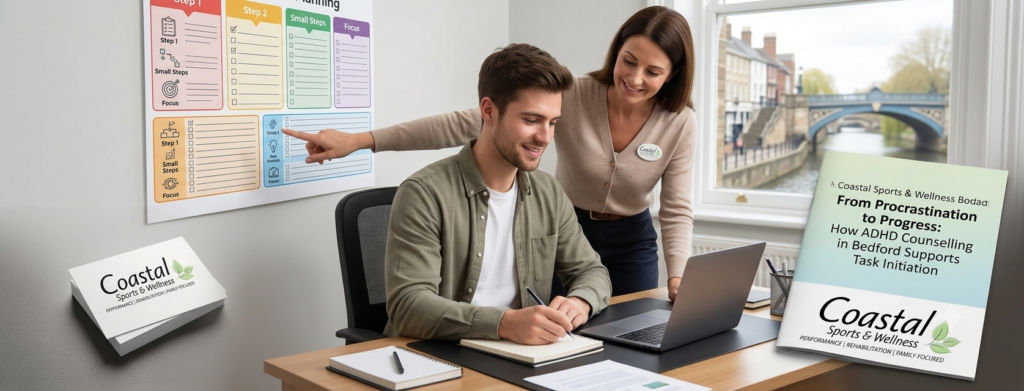
From Procrastination to Progress: How ADHD Counselling in Bedford Supports Task Initiation
Understanding ADHD and the Challenge of Task Initiation
Starting a task may seem straightforward, but for people with attention-deficit/hyperactivity disorder (ADHD), getting started can sometimes be one of the most difficult parts of completing everyday responsibilities. Activities such as answering emails, organizing household items, completing assignments, preparing meals, or managing appointments may feel overwhelming even when the person understands exactly what needs to be done. This difficulty is often associated with executive functioning, which includes the mental processes involved in planning, organizing, prioritizing, and initiating actions. Individuals with ADHD may experience a gap between knowing what they need to accomplish and being able to translate that knowledge into action. ADHD counselling in Bedford can help individuals understand these challenges, identify the barriers that interfere with task initiation, and develop practical strategies suited to their needs. At Coastal Sports And Wellness, we recognize the importance of compassionate support that helps people build confidence, improve daily functioning, and work toward meaningful personal goals.
Why Procrastination Is Not Always a Lack of Motivation
Procrastination is often misunderstood as laziness, carelessness, or a lack of discipline, but these explanations do not adequately describe the experiences of many people with ADHD. An individual may genuinely want to complete a task while struggling to determine where to begin, maintain attention, or overcome the discomfort associated with getting started. Tasks that appear simple to others can involve several hidden steps that make them difficult to organize mentally. For example, preparing a report may require gathering information, deciding on a structure, reviewing instructions, and estimating how long each stage will take. When these steps feel difficult to manage, delaying the task may temporarily reduce stress even though the underlying responsibility remains unresolved. Counselling can help individuals recognize that procrastination may involve several interacting factors and develop strategies that address those factors instead of relying entirely on willpower.
Understanding Executive Dysfunction and Its Effect on Daily Life
Executive functioning plays an important role in transforming intentions into organized actions. These mental processes help people decide what to do first, remember instructions, manage competing priorities, estimate time, and adjust their behaviour when circumstances change. ADHD can affect these abilities, making everyday responsibilities feel more demanding than expected. Someone might begin the day intending to complete several important activities but become distracted by minor tasks, lose track of time, or struggle to choose which responsibility deserves attention first. Repeated experiences of unfinished work can contribute to frustration, embarrassment, and reduced confidence, particularly when other people assume the individual simply needs to try harder. Through ADHD counselling, individuals can explore how executive functioning difficulties affect their routines and identify practical methods for reducing unnecessary complexity in their daily responsibilities.
Identifying the Emotional Barriers That Prevent Task Initiation
Task initiation difficulties are not always caused by organizational challenges alone. Anxiety, perfectionism, fear of failure, low confidence, and previous negative experiences can also make it harder to begin a task. A person who worries about making mistakes may delay starting because they feel they must understand every detail before taking the first step. Someone who has repeatedly struggled to meet deadlines may begin to expect failure, making new responsibilities feel discouraging before any work has started. These emotional responses can create a cycle in which avoidance provides temporary relief but increases pressure as deadlines approach. Counselling can help individuals recognize the relationship between their emotions and behaviour, develop healthier responses to uncertainty, and practise approaching tasks without requiring themselves to feel completely prepared first.
Breaking Overwhelming Tasks Into Manageable Steps
Large tasks can become difficult to initiate when the brain has to process too many decisions at once. An assignment described as completing a project, organizing an entire house, or preparing for a major meeting may feel vague because it contains numerous smaller responsibilities. Breaking the activity into specific actions can reduce the mental effort required to decide what to do next. Instead of focusing on completing an entire project, an individual might begin by opening the relevant document, reviewing the instructions, or writing down three key points. These smaller actions create a clear starting point and make progress easier to recognize. At Coastal Sports And Wellness, we understand the value of practical approaches that help individuals move from feeling overwhelmed to identifying achievable steps that fit their circumstances.
Using the Five-Minute Rule to Make Starting Easier
One strategy that some people find helpful is committing to work on a task for just five minutes. This approach reduces the perceived demand of getting started because the immediate goal is not to finish the entire responsibility but simply to begin. For example, someone who has been avoiding household paperwork might spend five minutes opening letters and sorting them into basic categories. A student might spend the same amount of time reviewing assignment instructions or creating a rough outline. Once the initial resistance decreases, continuing may feel easier, although it is perfectly acceptable to stop after the agreed period when needed. Counselling can help individuals experiment with short starting intervals, identify which activities respond well to this approach, and develop realistic expectations about how much effort they can sustain.
Building Consistent Routines Without Depending on Motivation
Motivation naturally fluctuates, which means relying on enthusiasm alone can make daily responsibilities unpredictable. People with ADHD may find it particularly useful to establish routines that reduce the number of decisions required before beginning an activity. Connecting a task to an existing habit, such as reviewing a daily schedule after breakfast or preparing work materials before going to bed, can create a more consistent starting point. Environmental cues, written reminders, and visible checklists may also help individuals remember intended activities when attention shifts elsewhere. However, routines should remain flexible enough to accommodate changing energy levels, unexpected responsibilities, and individual preferences. ADHD counselling in Bedford can help people identify routines that are practical and sustainable rather than creating rigid schedules that become another source of pressure.
Managing Time Blindness and Improving Time Awareness
Time blindness refers to difficulty perceiving, estimating, or tracking the passage of time, an experience commonly reported by some people with ADHD. An individual may believe a task will take only a few minutes when it actually requires much longer, or become deeply absorbed in one activity while losing awareness of other responsibilities. These difficulties can make it challenging to start tasks early enough, transition between activities, and meet deadlines consistently. External time cues can provide useful support by making time more visible and easier to manage. Timers, calendar reminders, scheduled breaks, and realistic estimates of task duration may help individuals develop a clearer understanding of their daily schedules. Counselling can support the development of personalized time-management strategies while recognizing that improving time awareness often requires experimentation, practice, and adjustments over time.
Reducing Distractions and Creating a Supportive Environment
The environment in which a person works can influence their ability to initiate and sustain attention. Background conversations, phone notifications, cluttered workspaces, and frequent interruptions may make it harder to concentrate on tasks that already require significant mental effort. Some individuals work more effectively in quiet surroundings, while others benefit from gentle background noise or the presence of another person working nearby. Organizing materials in advance can also reduce the number of decisions required before starting an activity. For example, preparing a workspace the evening before may make it easier to begin work the following morning without searching for documents or supplies. We encourage individuals to explore environmental adjustments that reduce friction and make important tasks easier to approach, rather than assuming that every difficulty must be solved through greater concentration alone.
Exploring Body Doubling and External Accountability
Body doubling involves working alongside another person, either in the same physical space or through a virtual arrangement, while each person focuses on their own activities. For some people with ADHD, the presence of another person can provide structure, reduce isolation, and make it easier to begin a task. External accountability can serve a similar purpose by creating an agreed time to start, a clear objective, or an opportunity to discuss progress with someone supportive. These approaches may be particularly useful for activities that feel repetitive, administrative, or difficult to organize independently. However, not everyone finds shared work environments helpful, and some individuals may experience additional distraction or social pressure. Counselling can help people determine whether body doubling or accountability arrangements suit their needs and how to use these strategies without creating unrealistic expectations or unnecessary dependence on others.
Overcoming Perfectionism and the Fear of Getting It Wrong
Perfectionism can become a significant obstacle to task initiation when individuals believe their work must meet exceptionally high standards from the beginning. Someone may spend considerable time planning an activity, researching every possible option, or waiting for the right conditions before taking action. Although preparation can be useful, excessive preparation may become a way of avoiding the uncertainty involved in producing an imperfect first attempt. Over time, this pattern can contribute to missed opportunities, unfinished projects, and increasing stress as deadlines approach. Counselling can help individuals examine the beliefs that make mistakes feel threatening and practise approaching tasks with more flexible expectations. Learning to produce a rough draft, complete an imperfect first step, or revise work after starting can make progress more achievable and reduce the pressure associated with beginning.
Developing Emotional Regulation Skills for Difficult Tasks
Some tasks trigger strong emotional responses because they involve uncertainty, repetitive effort, criticism, or the possibility of failure. When frustration or anxiety becomes intense, a person may find it difficult to organize their thoughts and move into action. Avoidance can then become an immediate way to escape discomfort, even when delaying the activity creates greater stress later. Emotional regulation strategies can help individuals recognize these reactions and respond in ways that support task initiation. Depending on individual needs, counselling may explore identifying emotional triggers, using brief grounding exercises, adjusting expectations, or taking planned breaks before returning to a responsibility. Developing these skills can help people respond more deliberately to difficult feelings instead of allowing temporary discomfort to determine whether an important task gets started.
Improving Task Initiation at Work and in Education
Task initiation challenges can affect professional and academic performance in several ways. Employees may struggle to begin complex assignments, respond to administrative requests, prioritize competing deadlines, or transition between meetings and focused work. Students may understand course material but have difficulty starting essays, preparing for examinations, or dividing large assignments into manageable stages. These difficulties can sometimes be mistaken for a lack of commitment, particularly when other people cannot see the effort required to organize and initiate work. Counselling can help individuals identify patterns that interfere with performance and develop strategies that reflect their responsibilities and working environments. Where appropriate, individuals may also explore workplace or educational accommodations, clearer instructions, scheduled check-ins, and alternative ways of organizing tasks that support more consistent participation.
Strengthening Self-Compassion and Rebuilding Confidence
Repeated difficulties with procrastination can affect how individuals view their abilities and personal worth. Some people with ADHD have spent years hearing criticism about being disorganized, forgetful, inconsistent, or unreliable, which may influence how they interpret future challenges. When a task remains unfinished, they may view the experience as proof that they cannot succeed rather than an opportunity to identify which strategy needs adjustment. Self-compassion involves acknowledging difficulties without using them as a reason for harsh self-judgment. Counselling can help individuals develop a more balanced understanding of their experiences, recognize their existing strengths, and measure progress through realistic improvements rather than perfection. At Coastal Sports And Wellness, we believe that supportive guidance can help individuals build confidence while developing practical skills that make everyday responsibilities more manageable.
Understanding the Role of ADHD Counselling in Bedford
ADHD counselling can provide a structured opportunity to understand task initiation difficulties and explore approaches that fit an individual’s needs, goals, and daily circumstances. Sessions may focus on recognizing procrastination patterns, addressing emotional barriers, improving organization, and developing practical routines. Counselling can also help individuals examine the effects of ADHD on relationships, self-esteem, work, education, and other areas of life. The process is not about expecting every person to follow the same productivity system or maintain a perfectly organized schedule. Instead, it involves identifying the specific situations that create difficulties and testing strategies that can be adjusted according to individual responses. Depending on a person’s circumstances, counselling may complement other forms of ADHD support, including medical assessment, medication management through an appropriate healthcare professional, coaching, or occupational support.
Knowing When to Seek Professional Support
Occasional procrastination is a common experience, but persistent difficulty initiating tasks may deserve further attention when it regularly interferes with daily functioning. Individuals may benefit from seeking support if they frequently miss important deadlines, struggle to manage basic responsibilities, experience significant distress about unfinished tasks, or find that organizational strategies have not helped enough. ADHD is not the only possible explanation for these challenges, as anxiety, depression, sleep difficulties, chronic stress, and other factors can also affect concentration and motivation. A qualified healthcare professional can help determine whether an ADHD assessment or another form of evaluation may be appropriate. Counselling can provide support for emotional and practical challenges while individuals explore their experiences and consider suitable next steps. Seeking help is not an admission of failure but a constructive way to understand persistent difficulties and identify approaches that support daily life.
Moving From Procrastination to Sustainable Progress
Making progress with ADHD-related task initiation difficulties rarely depends on finding one perfect technique. Lasting improvement is more likely to involve a combination of manageable starting steps, realistic routines, environmental adjustments, emotional awareness, and strategies for responding to setbacks. Individuals may discover that certain techniques work well for administrative tasks but are less useful for creative projects or emotionally demanding responsibilities. Reviewing what works, adapting unsuccessful approaches, and recognizing small achievements can help create a more flexible and sustainable system. It is also important to recognize that progress may vary from day to day, particularly when energy levels, stress, sleep, and competing demands change. We encourage individuals to view task initiation as a skill that can be supported and developed over time, rather than a personal quality that they either possess or lack.
Conclusion: Building Confidence One Task at a Time
ADHD-related procrastination can create frustration, missed deadlines, and feelings of self-doubt, but difficulty getting started does not mean that an individual lacks intelligence, ambition, or the ability to make meaningful progress. Understanding executive functioning challenges, emotional barriers, and environmental influences can provide a clearer starting point for change. ADHD counselling in Bedford offers an opportunity to explore these experiences, develop practical task initiation strategies, and build healthier responses to setbacks. By breaking responsibilities into manageable steps, creating supportive routines, addressing perfectionism, and practising self-compassion, individuals can make everyday tasks feel more approachable. Progress does not require completing everything perfectly or maintaining the same level of productivity every day. With appropriate support and strategies tailored to individual needs, it is possible to move toward greater confidence, improved daily functioning, and a more balanced relationship with work and personal responsibilities. Coastal Sports And Wellness encourages individuals experiencing persistent task initiation difficulties to explore appropriate support and take practical steps toward a more manageable and fulfilling daily life.