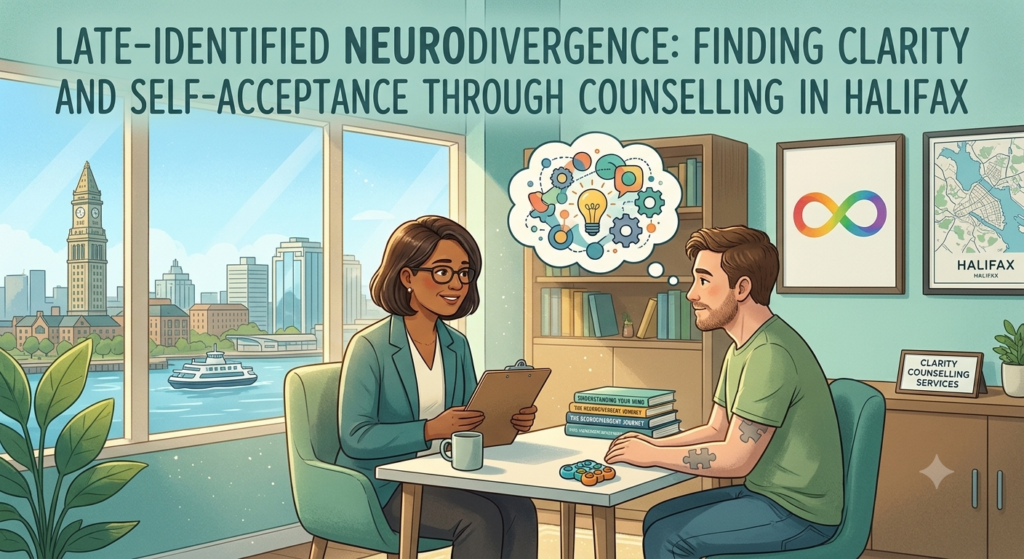
Late-Identified Neurodivergence: Finding Clarity and Self-Acceptance Through Counselling in Halifax
Understanding Late-Identified Neurodivergence
Neurodivergence describes differences in how people think, learn, communicate, process information, and experience the world around them. Conditions such as autism, attention-deficit/hyperactivity disorder (ADHD), and other neurodevelopmental differences can influence everyday experiences in ways that are not always recognized during childhood. Some individuals receive a diagnosis early in life, while others spend decades trying to understand why certain situations feel more challenging for them than they seem to be for other people. Late identification can bring a mixture of relief, confusion, grief, and curiosity as individuals begin to reconsider their personal histories. Counselling in Halifax can provide a supportive environment for exploring these experiences, understanding individual needs, and developing healthier ways to navigate everyday life. At Coastal Sports And Wellness, we recognize the importance of creating space for self-understanding, emotional well-being, and personal growth without judgment.
Why Neurodivergence May Go Unrecognized Until Adulthood
Neurodivergence can remain unidentified for many years because its characteristics do not always match common stereotypes or expectations. Some children develop strategies to manage social interactions, organize their responsibilities, or cope with sensory discomfort without adults recognizing the effort involved. Others may perform well academically or professionally while privately experiencing exhaustion, anxiety, or difficulty maintaining relationships. Expectations within families, schools, and workplaces can also influence whether certain behaviours are understood as neurodevelopmental differences or interpreted as personality traits. In some cases, individuals learn to imitate social behaviours, suppress their natural responses, or develop elaborate routines to meet external expectations. These experiences can make it difficult to recognize the underlying reasons for persistent challenges until adulthood brings new responsibilities, greater self-awareness, or access to appropriate assessment and support.
Recognizing the Emotional Impact of a Late Identification
Discovering that you may be neurodivergent later in life can change how you understand your identity and personal experiences. Events that once seemed confusing, frustrating, or embarrassing may begin to make more sense when viewed through a different perspective. You might reconsider childhood friendships, academic struggles, workplace difficulties, or recurring misunderstandings with family members. Although this realization can provide relief, it may also bring sadness about the support, understanding, or accommodations you did not receive earlier in life. Some people feel frustrated that their difficulties were misunderstood, while others worry about how a diagnosis or new understanding might affect their relationships and future plans. Counselling can help individuals explore these emotions at their own pace, allowing them to acknowledge past difficulties while developing a more compassionate understanding of themselves.
Moving Beyond Self-Blame and Negative Self-Perceptions
Many adults who discover their neurodivergence later in life have spent years criticizing themselves for difficulties they could not fully explain. They may believe they are lazy because they struggle to begin tasks, careless because they overlook details, or socially inadequate because certain interactions require considerable effort. Repeated criticism from others can reinforce these beliefs and make them difficult to challenge, even after individuals begin understanding their neurodevelopmental differences. Counselling can provide an opportunity to examine these assumptions and distinguish genuine personal limitations from expectations that may not reflect individual needs or circumstances. Through reflective conversations and practical strategies, individuals can begin replacing harsh self-judgment with realistic expectations and greater self-compassion. We believe that understanding your challenges in context can create opportunities to recognize your strengths, identify useful support, and approach daily life with greater confidence.
Understanding Masking and the Pressure to Fit In
Masking refers to the conscious or unconscious process of hiding, suppressing, or compensating for traits associated with neurodivergence to meet social expectations. For example, an individual might rehearse conversations before meetings, force themselves to maintain eye contact, imitate the behaviour of colleagues, or conceal discomfort in noisy environments. Although masking can help some people navigate particular social or professional situations, maintaining these strategies may require considerable emotional and cognitive effort. Over time, individuals may experience exhaustion, increased anxiety, reduced confidence, or uncertainty about which behaviours genuinely reflect their preferences. Counselling can help people identify when masking occurs, understand the situations in which it feels necessary, and explore whether alternative approaches would better support their well-being. The goal is not to eliminate every adaptation but to help individuals make informed choices about how they communicate, participate in social settings, and protect their emotional energy.
How Counselling in Halifax Can Support Self-Understanding
Counselling offers a confidential and supportive setting where adults can explore their experiences without feeling pressured to conform to conventional expectations. A counsellor can help clients discuss recurring emotional difficulties, relationship patterns, sensory experiences, executive functioning challenges, and the impact of feeling misunderstood. These conversations can support a clearer understanding of personal needs while helping individuals identify practical changes that may improve everyday functioning. For people who are newly exploring neurodivergence, counselling can also provide space to consider questions about identity, diagnosis, accommodations, and available resources. A neurodiversity-affirming approach recognizes that differences do not automatically represent deficits and that support should be adapted to each person’s circumstances. Coastal Sports And Wellness recognizes the value of compassionate support that respects individual experiences and encourages clients to develop a more informed and accepting relationship with themselves.
Navigating Grief, Relief, and Mixed Emotions After Identification
Late identification does not produce the same emotional response for everyone, and individuals may experience several seemingly contradictory feelings at once. Relief can emerge when long-standing challenges finally have a possible explanation, while grief may arise from reflecting on years spent without suitable understanding or accommodations. Some people feel anger toward individuals or institutions that dismissed their concerns, while others experience uncertainty about whether to reconsider their established identity. These reactions are not signs that someone is handling the process incorrectly, and there is no fixed timeline for adjusting to new information. Counselling can help individuals acknowledge these feelings without rushing toward acceptance or expecting every past experience to become understandable immediately. By exploring the meaning of identification gradually, people can develop a more balanced perspective that recognizes both the difficulties they have faced and the possibilities available to them now.
Building Healthier Relationships Through Better Communication
Understanding neurodivergence can influence how individuals interpret their relationships with partners, relatives, friends, and colleagues. Differences in communication styles, sensory needs, emotional expression, and social energy can sometimes lead to misunderstandings when people assume everyone processes situations in the same way. For instance, someone may need additional time to process a difficult conversation, prefer direct language, or require quiet time after a demanding social event. Without clear communication, these preferences may be mistaken for disinterest, hostility, or a lack of affection. Counselling can help individuals identify their communication needs, express boundaries more confidently, and explore strategies for managing interpersonal conflict. Developing mutual understanding can strengthen relationships by encouraging honest conversations about expectations, emotional needs, and the practical adjustments that help everyone participate more comfortably.
Managing Anxiety, Stress, and Emotional Overload
Adults who discover their neurodivergence later in life may also be managing anxiety, chronic stress, emotional exhaustion, or difficulties regulating intense feelings. These experiences can develop in response to prolonged masking, unpredictable environments, repeated misunderstandings, or the demands of managing responsibilities without appropriate support. Sensory overload, competing tasks, changes in routine, and social pressure may make certain situations particularly challenging. Counselling can help individuals recognize their stress responses and identify patterns that contribute to emotional overload. Depending on the person’s needs, sessions may explore grounding techniques, pacing, boundary-setting, problem-solving, and strategies for recovering after demanding experiences. Rather than expecting individuals to tolerate every environment, effective support can also involve identifying practical adjustments that reduce unnecessary stress and make daily routines more manageable.
Developing Executive Functioning Strategies for Everyday Life
Executive functioning involves mental processes that support planning, prioritization, organization, time management, task initiation, and the regulation of attention. Some neurodivergent adults find these activities challenging, even when they have the knowledge, motivation, or ability needed to complete a task. Everyday responsibilities such as paying bills, managing appointments, organizing household tasks, and meeting deadlines can therefore require substantial effort. Counselling can help individuals identify where difficulties arise and explore strategies suited to their working styles rather than relying on generic productivity advice. These strategies might include breaking large tasks into smaller steps, using reminders, establishing predictable routines, reducing distractions, and building realistic recovery periods into busy schedules. The objective is to create practical systems that support independence and reduce frustration while recognizing that different people benefit from different approaches.
Exploring Identity, Strengths, and Personal Values
A late understanding of neurodivergence can encourage individuals to reconsider not only their challenges but also the characteristics that have helped them thrive. Some people recognize strengths in creative thinking, detailed observation, pattern recognition, focused interests, problem-solving, or approaching familiar questions from unconventional perspectives. These characteristics vary considerably between individuals, and no single strength or experience applies to everyone who is neurodivergent. Counselling can help clients identify their own abilities, interests, values, and preferred ways of engaging with the world. This process can be particularly meaningful for people whose self-image has been shaped by years of criticism or repeated experiences of feeling different. Building a more balanced identity involves acknowledging difficulties honestly while also recognizing personal qualities that deserve appreciation and opportunities for development.
Seeking Assessment and Appropriate Professional Support
Counselling can help individuals explore their experiences, but it does not automatically establish whether someone is autistic, has ADHD, or has another neurodevelopmental condition. If a person wants diagnostic clarity, a qualified healthcare professional with relevant assessment experience can explain the available evaluation process and determine which assessments may be appropriate. A comprehensive assessment may consider developmental history, current experiences, daily functioning, and other possible explanations for the difficulties being experienced. This distinction matters because anxiety, depression, sleep problems, trauma, and other factors can sometimes overlap with or influence neurodevelopmental characteristics. Individuals do not necessarily need to wait for a formal diagnosis before discussing emotional challenges, exploring coping strategies, or seeking appropriate support. At Coastal Sports And Wellness, we encourage people to approach their questions with curiosity and seek suitable professional guidance when they want a clearer understanding of their experiences.
Creating Neurodivergent-Friendly Routines and Environments
Everyday environments can significantly influence how comfortable and effective people feel in their personal and professional lives. Bright lighting, background noise, unpredictable schedules, unclear instructions, and frequent interruptions may create difficulties for some neurodivergent individuals. In contrast, clear expectations, suitable sensory conditions, structured routines, and opportunities for breaks may make daily responsibilities easier to manage. Counselling can help individuals identify environmental factors that affect their concentration, emotional regulation, and overall well-being. It can also support conversations about reasonable adjustments at work, practical changes at home, and boundaries that protect time for rest and recovery. Rather than placing the entire responsibility for adaptation on the individual, this approach recognizes that making environments more supportive can improve participation, comfort, and quality of life.
Finding Self-Acceptance Without Pressure to Change Everything
Self-acceptance does not mean that every difficulty disappears or that individuals must immediately feel positive about every aspect of their experiences. Instead, it involves recognizing personal needs and differences without treating them as evidence of personal failure. Some people may want to develop new coping strategies, while others may focus on communicating boundaries, seeking accommodations, or reducing the pressure to meet unrealistic expectations. Counselling can help individuals decide which changes align with their values and which expectations they no longer wish to prioritize. Progress may involve small but meaningful developments, such as asking for clarification, allowing time to recover after social events, or recognizing the early signs of stress. With patience and appropriate support, people can develop a more flexible relationship with themselves and make decisions based on their actual needs rather than persistent self-criticism.
Taking the First Step Toward Counselling in Halifax
Beginning counselling can feel unfamiliar, particularly for individuals who have spent years managing their difficulties privately or believing they should be able to handle everything independently. It is normal to have questions about what sessions involve, what to discuss first, and whether a counsellor will understand your experiences. An initial conversation can provide an opportunity to explain your concerns, identify your goals, and discuss the kind of support that would feel most useful. You do not need to have a formal diagnosis or a complete explanation of your experiences before seeking help with emotional well-being. Finding a counsellor who respects neurodiversity, listens carefully, and adapts their approach to your needs can make the process more comfortable. We encourage individuals exploring late-identified neurodivergence to approach counselling as an opportunity to develop self-understanding, explore practical support, and build a life that better reflects their needs and values.
Conclusion: Embracing a More Compassionate Understanding of Yourself
Late-identified neurodivergence can bring new perspectives on childhood experiences, relationships, professional challenges, and long-standing patterns of behaviour. Although this process may involve uncertainty and difficult emotions, it can also create opportunities to understand personal needs and move beyond years of unnecessary self-blame. Counselling in Halifax can provide a supportive space to explore these changes, develop coping strategies, improve communication, and strengthen self-acceptance. With appropriate guidance, individuals can learn to recognize their limits, appreciate their strengths, and identify environments that allow them to thrive. Understanding neurodivergence is not about finding a single explanation for every experience or changing yourself to satisfy others. It is about developing a more accurate and compassionate understanding of who you are, what support you need, and how you can move forward with greater confidence. Coastal Sports And Wellness supports a thoughtful approach to well-being that values individual experiences and recognizes the importance of feeling understood, respected, and supported throughout the journey toward self-acceptance.