Physiotherapy Services in Halifax: How Movement Assessments Can Reveal the Cause of Recurring Pain
Understanding Why Recurring Pain Needs More Than Temporary Relief
Recurring pain can affect almost every aspect of daily life, from completing household responsibilities to participating in sports, exercising, or simply enjoying a comfortable walk. While occasional soreness may develop after physical activity or prolonged periods of sitting, pain that repeatedly returns can indicate an underlying movement problem that needs attention. Many people focus on relieving discomfort without understanding why it keeps coming back. Although rest, medication, massage, and other treatments may provide temporary relief, they do not always address the physical factors responsible for recurring symptoms. Identifying the source of discomfort is an important step towards developing a treatment approach that supports lasting improvement. Through our physiotherapy services in Halifax, we help individuals understand how their bodies move, identify potential movement limitations, and work towards improving physical function.
What Is a Physiotherapy Movement Assessment?
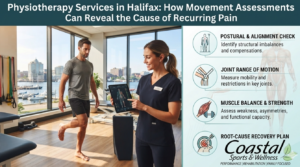
A physiotherapy movement assessment is a structured evaluation that examines how different parts of the body function individually and together during everyday activities. Rather than focusing exclusively on the location where someone experiences pain, a physiotherapist considers the entire movement system to identify possible contributing factors. This includes evaluating joint mobility, muscle strength, flexibility, balance, coordination, posture, and movement patterns. For example, someone experiencing recurring knee discomfort may also have restricted ankle mobility, reduced hip strength, or an altered walking pattern. These factors can influence how forces travel through the lower body during movement. By examining these relationships, a movement assessment provides valuable information that can help guide an appropriate rehabilitation plan.
Why Pain Does Not Always Originate Where It Appears
One of the most important principles of physiotherapy is understanding that the location of pain does not necessarily identify its original cause. The human body operates as an interconnected system, meaning that limitations in one area can affect movement and function elsewhere. For instance, recurring shoulder discomfort may be influenced by restricted upper back mobility, poor shoulder blade control, or weakness in surrounding muscles. Similarly, lower back pain may be associated with limited hip movement, reduced core endurance, or difficulties maintaining comfortable movement patterns. These relationships are not the same for everyone, which is why individual assessment is essential. By looking beyond the painful area, physiotherapists can investigate contributing factors that might otherwise remain overlooked. This broader approach helps create treatment strategies that address the individual’s functional needs rather than concentrating exclusively on temporary symptom management.
How Posture and Everyday Movement Habits Contribute to Recurring Pain
Posture and daily movement habits can influence how the body distributes physical stress throughout the day. Spending extended periods sitting at a desk, looking down at electronic devices, or repeatedly performing the same movements may contribute to stiffness and muscular discomfort. However, there is no single perfect posture that everyone must maintain throughout the day. Problems can develop when individuals remain in one position for prolonged periods without sufficient movement or when their bodies struggle to tolerate particular physical demands. During a movement assessment, a physiotherapist may examine sitting posture, standing alignment, walking mechanics, and the way someone performs common activities. This information can help identify habits or movement limitations that may contribute to recurring symptoms. Appropriate movement modifications, strengthening exercises, and mobility work can then be incorporated into a rehabilitation programme.
Identifying Muscle Imbalances and Strength Deficiencies
Muscle strength plays an important role in supporting joints, maintaining stability, and controlling movement during everyday activities. When certain muscles are weaker or less coordinated than others, the body may compensate by relying more heavily on surrounding structures. Over time, these compensatory patterns can increase physical demands on particular muscles, joints, and soft tissues. For example, reduced gluteal strength may influence lower body movement during walking, climbing stairs, or performing squats. Similarly, inadequate core endurance may affect how someone controls their trunk during lifting, bending, and repetitive activities. A physiotherapy assessment can evaluate muscle strength, endurance, activation, and coordination to identify potential weaknesses. Based on these findings, our rehabilitation approach can incorporate targeted strengthening exercises designed to improve muscular support and help individuals move with greater control.
Assessing Joint Mobility and Flexibility Restrictions
Healthy movement depends on the ability of joints and surrounding tissues to move through the ranges required for everyday activities. Restricted mobility can develop for several reasons, including previous injuries, prolonged inactivity, repetitive physical demands, and age-related changes. When one joint cannot move comfortably through its available range, other areas may compensate to complete the required movement. This can alter movement mechanics and potentially increase stress on surrounding structures. During an assessment, physiotherapists may evaluate joint range of motion, tissue flexibility, stiffness, and movement quality. These findings help determine whether mobility restrictions could be contributing to an individual’s recurring discomfort. Treatment may include appropriate mobility exercises, stretching, manual therapy when indicated, and progressive movement training to improve functional range of motion.
Understanding How Walking and Gait Patterns Reveal Hidden Problems
Walking is a complex activity that requires coordination between the feet, ankles, knees, hips, pelvis, and spine. Even small differences in joint mobility, muscle strength, or balance can influence the way someone walks. Individuals experiencing recurring foot, ankle, knee, or hip pain may unknowingly develop compensatory walking patterns to reduce discomfort. Although these adjustments can sometimes make movement feel easier temporarily, they may also create additional physical demands elsewhere. A gait assessment allows a physiotherapist to observe walking mechanics, including stride length, foot placement, weight distribution, joint movement, and balance. These observations can help identify irregularities that may be relevant to the person’s symptoms. Improving gait mechanics through appropriate strengthening, balance training, and movement education can support more comfortable walking and everyday mobility.
How Movement Assessments Help Identify Sports-Related Pain
People who participate in sports and regular exercise often place considerable demands on their muscles, joints, and connective tissues. Running, swimming, cycling, weightlifting, and recreational sports all require specific combinations of strength, mobility, coordination, and endurance. When physical demands exceed the body’s current capacity, discomfort or recurring injuries may develop. A movement assessment can help identify whether an athlete has limitations affecting their performance or increasing the difficulty of particular activities. For example, a runner experiencing repeated knee discomfort may benefit from an assessment of hip strength, ankle mobility, single-leg stability, and running mechanics. Someone experiencing shoulder pain during weightlifting may require an evaluation of shoulder mobility, scapular control, and upper body strength. Understanding these factors allows physiotherapy treatment to focus on improving movement capacity while supporting a gradual and appropriate return to physical activity.
The Importance of Balance and Coordination Testing
Balance and coordination are essential components of safe and efficient movement, particularly when performing activities that require changes in direction, single-leg support, or controlled weight transfer. Difficulties with balance may develop following injuries, periods of reduced activity, neurological conditions, or changes in physical strength and mobility. These limitations can affect walking, stair climbing, sports participation, and confidence during everyday activities. During a movement assessment, a physiotherapist may examine single-leg balance, postural control, coordination, and the ability to maintain stability during different movements. These tests can reveal weaknesses or movement difficulties that may not be obvious during a standard physical examination. Identifying these limitations helps determine whether balance and coordination exercises should form part of the rehabilitation programme. Improving these abilities can contribute to better movement control, functional independence, and confidence during physical activities.
Why Previous Injuries Matter When Investigating Recurring Pain
Previous injuries can influence movement patterns long after the initial symptoms have improved. An individual who has experienced an ankle sprain, knee injury, muscle strain, or back injury may unconsciously change the way they move to protect the affected area. Even after returning to normal activities, certain strength, mobility, or coordination limitations may remain. These changes can become more noticeable when physical demands increase or when someone returns to exercise after a period of inactivity. A comprehensive movement assessment considers injury history alongside current symptoms and functional abilities. Physiotherapists may examine whether previous injuries have affected joint mobility, muscular control, balance, or confidence during movement. This information is particularly valuable when developing rehabilitation strategies that address both current discomfort and the physical limitations associated with earlier injuries.
How Physiotherapists Use Assessment Findings to Develop Treatment Plans
A movement assessment is most valuable when its findings are translated into a practical treatment strategy. Every individual has different physical requirements, injury histories, activity levels, and rehabilitation goals, so treatment should reflect these differences. Following an assessment, a physiotherapist can identify relevant movement limitations and determine which areas require attention. A treatment programme may include therapeutic exercises, progressive strengthening, flexibility training, mobility exercises, balance activities, and manual therapy when clinically appropriate. Education about activity modification, movement techniques, and exercise progression can also help individuals manage their symptoms between appointments. Treatment plans should be reviewed regularly to evaluate improvements and adjust exercises as physical capacity changes. This personalised approach helps ensure that rehabilitation remains relevant to the individual’s progress and long-term functional goals.
The Role of Progressive Strengthening in Preventing Recurring Discomfort
Strengthening exercises are an important component of many physiotherapy programmes because they help improve the body’s ability to tolerate everyday physical demands. However, effective strengthening involves more than simply lifting heavier weights or completing a high number of repetitions. Exercises should be selected according to the individual’s current abilities, movement limitations, symptoms, and rehabilitation objectives. Starting with manageable resistance and gradually increasing the challenge allows muscles and supporting tissues to adapt over time. For someone recovering from recurring back discomfort, this may involve improving trunk strength and endurance through carefully selected exercises. For someone experiencing knee pain, rehabilitation may focus on developing quadriceps, hamstring, and hip strength while improving lower limb control. Consistent and appropriately progressed exercise can help improve physical capacity, support joint function, and reduce the likelihood of returning to previous movement limitations.
Movement Education and Self-Management Between Physiotherapy Sessions
Physiotherapy does not begin and end inside the treatment room because everyday activities have a significant influence on physical recovery. Understanding how to manage movement, adjust activity levels, and follow an exercise programme can help individuals take an active role in their rehabilitation. A physiotherapist may recommend modifications to particular activities while maintaining an appropriate level of physical movement. This is important because avoiding all activity for extended periods can contribute to reduced strength, stiffness, and lower physical tolerance. Individuals may also benefit from learning how to recognise changes in symptoms and understand when an exercise needs adjustment. Education about lifting techniques, workplace ergonomics, warm-ups, and exercise progression can provide practical benefits beyond individual appointments. Our focus is to help people develop the knowledge and confidence needed to manage their physical health more effectively.
When Should You Consider Physiotherapy for Recurring Pain?
Recurring pain should not automatically be considered a normal consequence of ageing, exercise, or a busy lifestyle. If discomfort repeatedly returns during specific activities, interferes with sleep, affects mobility, or makes everyday responsibilities difficult, a physiotherapy assessment may help identify contributing factors. Individuals who experience repeated muscle strains, joint stiffness, reduced flexibility, or difficulty returning to exercise may also benefit from professional evaluation. It is particularly important to seek assessment when symptoms continue despite rest or repeatedly develop after returning to normal activities. A physiotherapist can review the symptoms, assess relevant movement patterns, and determine whether physiotherapy is appropriate or whether further medical investigation is required. Sudden severe pain, significant swelling, new weakness or numbness, unexplained symptoms, or pain following a serious injury may require prompt medical assessment. Seeking appropriate professional guidance can help individuals make informed decisions about their recovery and physical activity.
Choosing Physiotherapy Services in Halifax for Long-Term Movement Health
Choosing appropriate physiotherapy services involves looking for an approach that considers the individual’s symptoms, physical capabilities, lifestyle, and rehabilitation objectives. A useful assessment should provide more than a general explanation of where discomfort is occurring. It should investigate relevant movement patterns, identify potential functional limitations, and establish practical goals for treatment. Communication is equally important because individuals should understand what their assessment findings mean and how recommended exercises relate to their symptoms. Treatment should also adapt as strength, mobility, and movement control improve throughout rehabilitation. At Coastal Sports And Wellness, we recognise the importance of understanding the relationship between movement, physical function, and recurring discomfort. We aim to support individuals through appropriate assessment and personalised physiotherapy care that helps them work towards greater mobility, strength, and confidence.
Building a Stronger Foundation for a More Active Life
Recurring pain can be frustrating, particularly when it interferes with activities that individuals enjoy or need to perform regularly. However, identifying the factors contributing to discomfort can provide a clearer direction for rehabilitation and long-term physical health. Movement assessments offer valuable insight into joint mobility, muscle function, balance, posture, coordination, and everyday movement mechanics. Rather than concentrating exclusively on the painful area, this approach considers how different parts of the body work together during physical activity. With appropriate guidance, targeted exercises, and consistent rehabilitation, individuals can work towards improving their movement capacity and managing physical challenges more effectively. At Coastal Sports And Wellness, we believe that understanding how your body moves is an important part of making informed decisions about your physical health. Our goal is to help individuals in Halifax take meaningful steps towards improved movement, better physical function, and a more active lifestyle.