Jaw Dysfunction Bedford: Could Your Daily Posture Be Influencing How Your Jaw Moves?
Understanding the Connection Between Posture and Jaw Movement
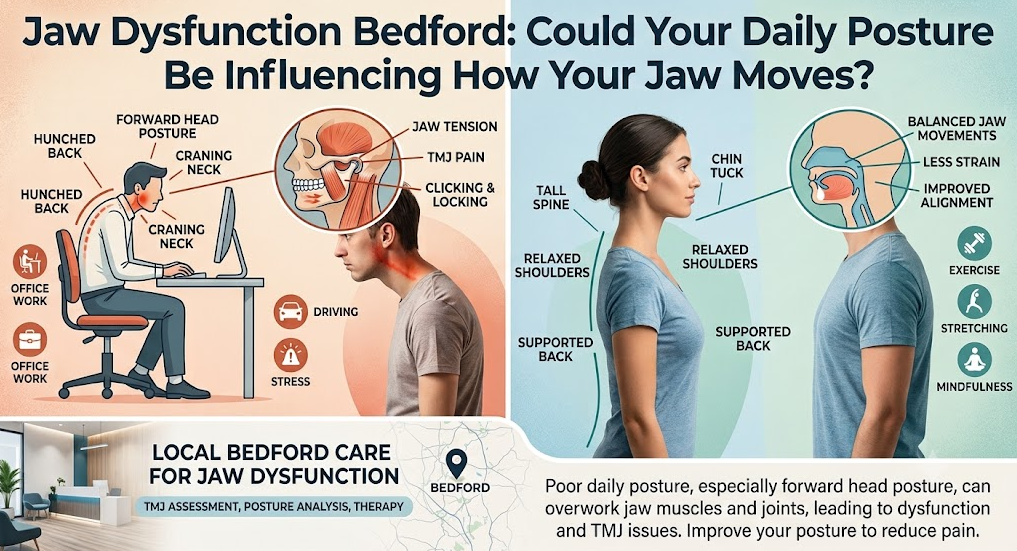
Jaw movement is influenced by much more than the muscles immediately surrounding the mouth and jaw. Your neck, shoulders, upper back, and head position can all contribute to the way your jaw moves throughout the day. When your posture changes, the muscles and joints responsible for supporting your head and controlling your jaw may also experience changes in tension and coordination. Spending hours looking down at a phone, working at a computer, or sitting with rounded shoulders can gradually alter your usual movement patterns. These changes do not automatically mean that poor posture is the cause of jaw dysfunction, but they can be one factor worth considering. Understanding this relationship may help Bedford residents identify everyday habits that could be contributing to jaw discomfort or restricted movement.
What Happens When Your Head Position Changes?
Your head and jaw are connected through a complex network of muscles, joints, ligaments, and nerves that work together during speaking, chewing, swallowing, and facial movement. When your head moves forward from its natural position, the muscles around your neck may have to work differently to support it. This can influence the surrounding structures that interact with the jaw and may change how the lower jaw rests or moves. A prolonged forward head position can also affect muscle coordination between the neck, upper back, and jaw. For some people, this may contribute to feelings of tightness, fatigue, clicking, or discomfort around the jaw and face. The relationship is individual, so a posture assessment should consider your overall movement pattern rather than focusing on one position alone.
The Modern Desk Work Problem
Many people in Bedford spend significant portions of their day sitting at desks, working remotely, studying, or using computers for extended periods. During concentrated work, it is common to gradually move the head toward the screen while allowing the shoulders and upper back to round forward. This position can become habitual when maintained for several hours without regular movement breaks. At the same time, stress and concentration may cause some people to unconsciously clench their teeth or hold tension around their face. The combination of prolonged sitting, altered head positioning, and increased muscular tension may place additional demands on the systems involved in jaw movement. Creating a more movement friendly working environment can therefore be a useful part of supporting overall musculoskeletal function.
How Smartphone Use Can Affect Movement Habits
Smartphones have introduced another common posture pattern that involves repeatedly looking downward for extended periods. Whether you are messaging, scrolling, reading, or watching videos, your head may remain in a forward or downward position for much longer than you realise. Maintaining this position can increase the workload placed on certain muscles around the neck and upper back. Over time, repeated positioning may contribute to stiffness or reduced movement variety throughout the upper body. If you already experience jaw discomfort, these habits may be worth examining alongside other potential contributing factors. Rather than avoiding technology completely, regularly changing positions and incorporating natural movement throughout the day can help reduce prolonged static loading.
Could Shoulder Position Influence Your Jaw?
The shoulders and upper back provide an important foundation for the neck, which in turn has a close relationship with jaw mechanics. When the shoulders remain rounded for long periods, the position and activity of muscles throughout the upper body can change. This does not mean that rounded shoulders directly cause jaw dysfunction, because jaw symptoms can develop for many different reasons. However, examining shoulder and upper back movement can provide useful information when someone experiences persistent jaw tension or altered movement. Improving mobility and coordination throughout these connected regions may form part of a broader approach to movement rehabilitation. At Coastal Sports And Wellness, we consider the relationship between different areas of the body when assessing movement patterns rather than looking at the jaw in isolation.
The Role of Muscle Tension
Muscle tension can influence how comfortably the jaw moves during everyday activities such as chewing, speaking, yawning, and swallowing. Muscles around the jaw can become overactive for several reasons, including stress, repetitive habits, clenching, and changes in movement patterns. Muscles in the neck and upper body may also become tense when the body remains in one position for extended periods. Because these regions work together, tension in one area may affect how movement is distributed through another area. Identifying where unnecessary tension occurs can be an important step toward understanding why certain jaw movements feel restricted or uncomfortable. A qualified movement professional can assess these patterns and determine whether broader musculoskeletal factors may be relevant to your symptoms.
Signs That Your Jaw Movement May Need Attention
Jaw dysfunction can present in several different ways, and symptoms may vary considerably between individuals. Some people notice clicking or popping when opening or closing their mouth, while others experience stiffness, limited opening, tenderness, or discomfort around the jaw. Headaches, facial tension, and discomfort around the temples or ears can sometimes occur alongside jaw related problems, although these symptoms can have many possible causes. You may also notice that your jaw moves differently toward one side when opening or closing your mouth. Changes in movement that persist or interfere with normal activities are worth discussing with an appropriately qualified healthcare professional. Early attention can help identify contributing factors before an irritating movement pattern becomes more established.
Can Changing Your Posture Improve Jaw Comfort?
Postural awareness can be useful when jaw symptoms appear alongside noticeable neck, shoulder, or upper back tension. The goal is not to maintain a perfectly rigid posture throughout the day, because the human body is designed to move through many different positions. Instead, it can be more helpful to develop greater variety in your positions and avoid remaining in the same posture for prolonged periods. Adjusting your workstation, changing your sitting position, taking movement breaks, and allowing your shoulders and neck to move naturally may all support healthier movement habits. These strategies may be particularly relevant for people whose daily routines involve extensive computer or smartphone use. However, posture changes should be considered as one component of a broader assessment rather than as a universal solution for every jaw problem.
Why Movement Assessment Can Be Valuable
A movement assessment can provide information about how different parts of the body coordinate during everyday actions. Instead of examining only the location where discomfort occurs, an assessment can consider factors such as head position, neck mobility, shoulder movement, breathing patterns, muscle tension, and jaw mechanics. This broader perspective may help identify movement habits that could be contributing to symptoms or limiting comfortable function. It can also help distinguish between a simple movement habit and a problem that may require further evaluation from another healthcare professional. Individual assessment is especially important because similar jaw symptoms can have very different underlying contributors. At Coastal Sports And Wellness, our approach focuses on understanding the complete movement picture so that appropriate strategies can be considered for each individual.
Everyday Habits That Deserve a Closer Look
Small habits repeated hundreds of times throughout the day can have a greater influence on movement than a single posture held briefly. Consider how often you look down at your phone, lean toward your computer screen, support your chin with your hand, or sit without changing position. Notice whether you tend to clench your teeth when concentrating, driving, working, or dealing with stressful situations. Pay attention to whether your jaw feels different after long periods of desk work compared with periods when you are physically active. These observations can provide useful information about when symptoms appear and which activities may coincide with increased tension. Keeping track of these patterns can make conversations with a healthcare or movement professional more productive.
When Should You Seek Professional Guidance?
Occasional jaw clicking without pain or functional limitation may not necessarily indicate a serious problem, but persistent or worsening symptoms deserve appropriate attention. You should consider seeking professional guidance if jaw discomfort interferes with eating, speaking, sleeping, exercising, or other normal activities. Significant difficulty opening or closing the mouth, persistent pain, swelling, or a sudden change in jaw function should also be assessed promptly. Jaw symptoms accompanied by other concerning symptoms may require evaluation by a dentist, physician, physiotherapist, or another appropriate healthcare professional. A professional assessment can help determine whether posture and movement patterns are relevant or whether another explanation should be investigated. Avoiding self diagnosis is important because jaw symptoms can arise from several different conditions and may require different approaches.
Building Better Movement Awareness
Improving your awareness of daily movement does not require constantly monitoring every position your body takes. A more practical approach is to notice prolonged periods of stillness and introduce regular opportunities to change position, move, stretch, and relax unnecessary muscular tension. Your workstation can be adjusted so that your screen, chair, keyboard, and other equipment support a comfortable working environment. During phone use, bringing the device closer to eye level at times may reduce the need to maintain a prolonged downward gaze. Regular movement throughout the day can also help you recognise how different activities affect your neck, shoulders, and jaw. These simple changes can complement professional care when jaw dysfunction or related movement concerns are already present.
Looking Beyond the Jaw
Jaw movement does not happen in isolation because the body operates through interconnected systems of joints, muscles, nerves, and movement patterns. For this reason, understanding jaw dysfunction may require looking beyond the immediate area around the mouth. Your posture, neck mobility, shoulder mechanics, daily habits, stress levels, and other factors may all be relevant depending on your individual circumstances. At Coastal Sports And Wellness, we believe that understanding these broader relationships can help create a more complete picture of movement and function. Our focus is on identifying relevant movement factors while recognising that persistent or complex symptoms may require collaboration with other healthcare professionals. If you are experiencing ongoing jaw discomfort or changes in jaw movement in Bedford, a personalised assessment can be a useful starting point for understanding what may be influencing your movement.
Taking the Next Step
Your everyday posture may not be the sole explanation for jaw dysfunction, but the way you position and move your body throughout the day can be an important part of the overall picture. Paying attention to prolonged sitting, smartphone use, workstation habits, shoulder positioning, and unconscious jaw tension can help you better understand your movement patterns. The most useful approach is usually not to chase a perfect posture but to develop comfortable, varied, and efficient movement throughout the day. If jaw symptoms persist, professional assessment can help determine which factors are relevant and whether further evaluation is appropriate. A personalised approach can be particularly valuable when symptoms involve several connected areas such as the jaw, neck, shoulders, and upper back. By understanding how your daily habits influence movement, you can take informed steps toward supporting more comfortable jaw function and overall physical wellbeing.