Movement Screening Before Training: What Bedford Athletes Can Learn Before Increasing Their Workload
Why Movement Screening Matters Before Training
Increasing training volume can be an important part of athletic development, but adding more workload without understanding how the body moves can create unnecessary challenges. Movement screening gives athletes an opportunity to identify movement patterns that may affect performance, coordination, mobility, stability, or exercise technique before training demands increase. Instead of focusing only on how much weight an athlete can lift or how fast they can run, screening looks at how effectively the body performs fundamental movements. This can provide useful information for athletes who are preparing for a new season, returning to structured training, or progressing toward a specific performance goal. At Coastal Sports And Wellness, we use movement-focused assessment as part of a broader approach to helping people understand how their bodies respond to physical demands. For Bedford athletes, this type of preparation can make workload progression more informed and purposeful.
What Is Movement Screening?
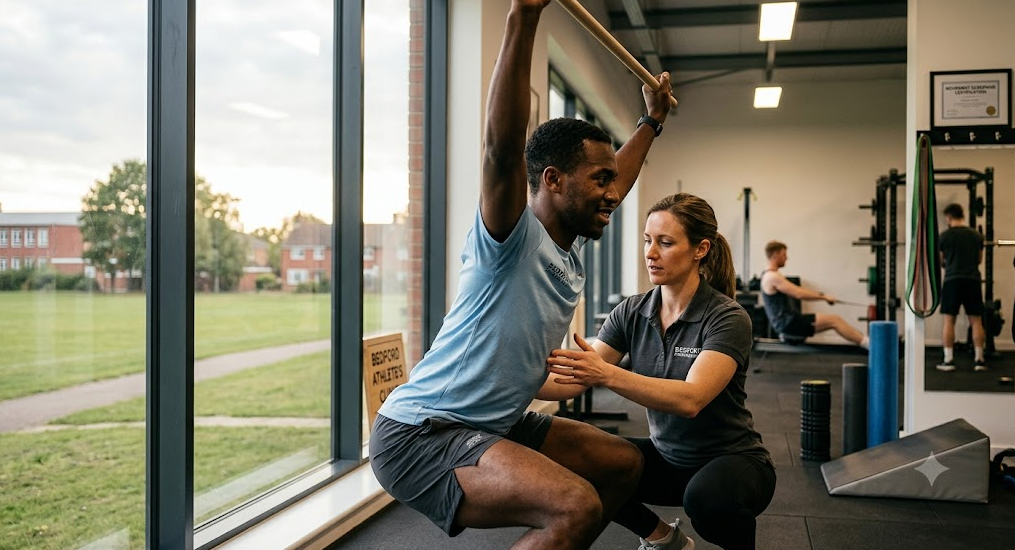
Movement screening is a structured process used to observe how a person performs selected movements and identify areas that may deserve further attention. Depending on the athlete and their goals, screening can examine mobility, balance, coordination, joint control, posture, strength-related movement patterns, and the ability to maintain technique during basic tasks. It is not simply a test of whether someone can complete an exercise, because the quality and consistency of the movement can provide additional information. A screening may involve movements such as squatting, lunging, reaching, rotating, stepping, balancing, or other patterns relevant to the athlete’s sport. The findings can help establish a baseline before training intensity, frequency, or volume is increased. This gives athletes and practitioners a clearer starting point for making sensible training decisions.
Understanding Your Current Movement Capacity
Every athlete enters a training program with a different combination of movement habits, previous training experience, physical capacity, and sport-specific demands. Two athletes may complete the same exercise successfully while using noticeably different movement strategies to achieve the same result. These differences can become more important when training volume increases because fatigue may make it harder to maintain efficient technique. A movement screen can help identify patterns that are worth monitoring as workload changes. It can also help athletes understand that performance is not only about strength or endurance, but also about how different parts of the body work together. Understanding this starting point can make future training progress easier to measure.
Mobility and Training Preparation
Mobility plays an important role in allowing athletes to access the positions required by their chosen activities. Limited movement in one area can sometimes influence how another part of the body contributes to a task, particularly when an exercise requires coordinated movement across multiple joints. A screening can help highlight whether certain movements appear restricted compared with what is expected for a particular activity. This does not automatically mean that a limitation represents an injury or requires treatment, because movement variation is normal among athletes. Instead, the information can help determine whether mobility should be considered when selecting exercises or progressing training demands. Bedford athletes can use this information to make warm-ups, mobility work, and exercise selection more specific to their individual needs.
Stability and Control During Movement
Strength is valuable for athletic performance, but the ability to control movement is equally relevant when an athlete is performing demanding activities. Stability involves controlling the position and movement of different body segments while completing a task, and this can influence how efficiently an athlete transfers force. Screening may reveal differences in balance, joint control, or coordination that are not obvious during isolated strength exercises. These observations can become particularly useful when an athlete is preparing to perform movements at greater speed or under heavier resistance. Training can then be structured around improving control where appropriate rather than simply adding more intensity. Our approach considers movement quality as one part of the larger picture when helping athletes prepare for increased demands.
Why Increasing Workload Requires Preparation
Training workload can increase through heavier resistance, additional repetitions, longer sessions, greater frequency, higher running volume, or more demanding sport-specific drills. Each form of progression places additional demands on the body, and increasing several variables at once can make it harder to understand how the athlete is responding. A movement screen before progression can provide useful baseline information that helps practitioners and athletes identify areas requiring attention. It does not eliminate the possibility of discomfort, fatigue, or injury, but it can contribute to a more considered approach to training progression. Athletes should also consider recovery, sleep, nutrition, previous training history, and the demands of their sport when deciding how quickly to increase workload. A screening is therefore best viewed as one component of a broader training preparation process.
Movement Quality Under Fatigue
An athlete may demonstrate excellent movement control at the beginning of a session and show different patterns after repeated effort. Fatigue can affect coordination, balance, concentration, and the ability to maintain consistent technique. Understanding how movement changes as training becomes more demanding can therefore be useful when planning workload progression. While a basic movement screen does not necessarily reproduce every condition experienced during competition, it can highlight movement characteristics that deserve further observation. Athletes can then pay attention to whether technique remains consistent as repetitions, speed, or resistance increase. This can help create a more complete picture of readiness than relying on performance numbers alone.
Sport Specific Demands in Bedford
Different sports place different demands on the body, so movement assessment should be interpreted within the context of an athlete’s activities. A runner may need to manage repeated single-leg loading and changes in pace, while a footballer may need acceleration, deceleration, cutting, kicking, and rapid changes of direction. A tennis player may repeatedly rotate, reach, lunge, and react from different positions, while a strength athlete may encounter high mechanical demands during loaded compound movements. Screening can help connect general movement observations with the specific physical requirements of an athlete’s sport. This context is especially useful when an athlete is preparing for a new season or changing their training program. Bedford athletes can benefit from considering movement capacity alongside the technical and conditioning demands of their particular discipline.
Screening Before Returning to Training
Athletes returning after a period away from regular training may need to rebuild capacity gradually rather than immediately returning to previous workloads. Time away from training can result from holidays, schedule changes, competition breaks, illness, injury rehabilitation, or other circumstances. A movement screen can provide useful information about current movement patterns before an athlete resumes more demanding sessions. The results can be considered alongside training history, current symptoms, conditioning levels, and sport-specific requirements. This can help establish realistic starting points rather than assuming that previous performance levels automatically represent current capacity. A gradual return can then allow training demands to increase in response to how the athlete is progressing.
Identifying Asymmetries and Movement Differences
Human movement is rarely perfectly symmetrical, and some differences between sides can be completely normal. However, noticeable differences in how an athlete performs a movement can provide information that may be worth monitoring within the context of their sport and training history. Screening can compare left and right sides during selected tasks to observe differences in balance, range of movement, coordination, or control. These observations should not automatically be interpreted as evidence of an injury because screening findings require appropriate clinical and performance context. Instead, they can help identify areas where further assessment or targeted training may be useful. This approach allows athletes to treat screening results as information rather than as a simple pass or fail outcome.
How Screening Can Influence Exercise Selection
The information gained from movement screening can sometimes help guide exercise selection and progression. If an athlete has difficulty maintaining control during a particular movement, a coach or practitioner may consider modifying the exercise, reducing the load, changing the range, or introducing preparatory exercises. The objective is not necessarily to avoid challenging movements, but to select an appropriate level of challenge for the athlete’s current capacity. Exercises can then become progressively more demanding as movement control and physical capacity develop. This creates a connection between assessment and training rather than treating screening as an isolated activity. Our team can use these observations to support individualized strategies that align movement preparation with an athlete’s broader goals.
Screening Is Not a Prediction Tool
Movement screening should not be presented as a way to predict exactly who will or will not experience an injury. Athletic performance and injury risk are influenced by many interacting factors, including workload, previous injuries, recovery, environment, technique, training history, and individual characteristics. A screening captures information about movement at a particular point in time and under particular conditions. Its value comes from contributing to the overall understanding of an athlete rather than providing a definitive prediction about future outcomes. This distinction is important because athletes should not become unnecessarily concerned about a movement variation identified during an assessment. Instead, findings should be interpreted carefully and combined with relevant information about the person’s training and physical demands.
Building a More Individual Training Strategy
Generic training programs can provide useful structure, but athletes often respond differently to the same exercises and workloads. Movement screening can add individual information that helps practitioners understand where an athlete may need additional preparation or closer observation. This can influence decisions around warm-up activities, exercise variations, training volume, movement drills, mobility work, and progression speed. Individualization can be particularly valuable when an athlete has multiple training commitments or participates in a sport with demanding movement requirements. The goal is to create a training process that reflects the athlete’s current abilities while still providing appropriate opportunities for progression. This approach can make training more intentional instead of relying exclusively on predetermined workload increases.
Preparing for Higher Training Loads
Athletes often increase workload because they want to improve strength, endurance, speed, power, skill, or competition readiness. Before making a significant change, it is useful to consider whether the body is prepared for the specific demands being introduced. Movement screening can contribute to this preparation by identifying movement characteristics that may influence exercise technique or training tolerance. It can also establish reference points that can be revisited as the athlete progresses through a training phase. Combined with appropriate programming and recovery, this information can support a more measured approach to increasing demands. At Coastal Sports And Wellness, we believe athletes benefit from understanding what their bodies are currently capable of before asking them to do substantially more.
What Bedford Athletes Can Take From a Screen
A movement screen can provide athletes with practical information about how they currently move rather than simply telling them whether they are fit or unfit. It can highlight movement patterns that appear consistent, areas that may require additional attention, and factors that could be considered when progressing training. Athletes can use this information to communicate more effectively with coaches, physiotherapists, strength professionals, or other members of their support team. It can also encourage athletes to focus on the quality and control of movement instead of viewing training progress solely through numbers. When repeated appropriately, assessments may provide useful comparisons as training develops and physical demands change. The most valuable outcome is often a clearer understanding of how assessment findings connect with practical training decisions.
When Should Athletes Consider Movement Screening?
There is no single moment when every athlete needs a movement screen, because the appropriate timing depends on training history, goals, sport, and current circumstances. Some athletes may benefit from screening before beginning a new training program, while others may consider it when preparing for a new competitive season or increasing training volume. It can also be useful when an athlete notices a change in movement quality, experiences recurring discomfort, or wants additional information during a return to activity. Screening may provide a baseline that can be compared with later assessments when training demands have changed. The important consideration is whether the assessment can provide meaningful information that supports the athlete’s current objectives. A qualified professional can help determine whether screening is appropriate and how the findings should be interpreted.
Making Training Progress More Informed
Progressive overload is a fundamental concept in many training programs, but progression should be appropriate to the athlete’s current capacity and circumstances. Movement screening can add another layer of information by showing how an athlete performs fundamental movement patterns before greater demands are introduced. This can help identify considerations that may otherwise be overlooked when progression is based entirely on weights, repetitions, running distances, or training time. It also encourages athletes to view preparation as part of performance development rather than something that only matters when a problem appears. By combining movement information with training data and athlete feedback, progression decisions can become more individualized. For Bedford athletes, this can provide a practical framework for approaching increased workload with greater awareness and preparation.
Supporting Long Term Athletic Development
Athletic development is a long-term process that involves much more than achieving short-term improvements in performance. Athletes need to develop physical capacity while learning how to manage training stress, recovery, technique, competition schedules, and changing performance demands. Movement screening can contribute to this process by creating opportunities to reassess movement patterns as an athlete develops. It can also help athletes become more aware of how their bodies respond to different exercises and training environments. This awareness can encourage better communication between athletes and the professionals involved in their training. At Coastal Sports And Wellness, we focus on using movement information as part of a practical, individualized approach to supporting long-term physical performance.
A Smarter Starting Point for Your Next Training Phase
Increasing workload can be an important step toward achieving athletic goals, but preparation should come before simply adding more repetitions, resistance, distance, or intensity. Movement screening provides a structured opportunity to examine how an athlete moves and where additional attention may be appropriate before training demands rise. It does not replace clinical assessment, coaching expertise, recovery strategies, or individualized programming, but it can complement each of these areas. Athletes in Bedford can use the information to better understand their current movement capacity and make more informed decisions about their next training phase. Whether preparing for competition, returning to activity, or simply looking to improve physical performance, understanding movement can provide valuable context for progression. If you are considering increasing your workload, our team can help you explore whether movement screening could be a useful part of your training preparation.