How NAD+ Therapy in Bedford May Support Cellular Resilience During High-Demand Lifestyles
Understanding Cellular Resilience in a Demanding Lifestyle
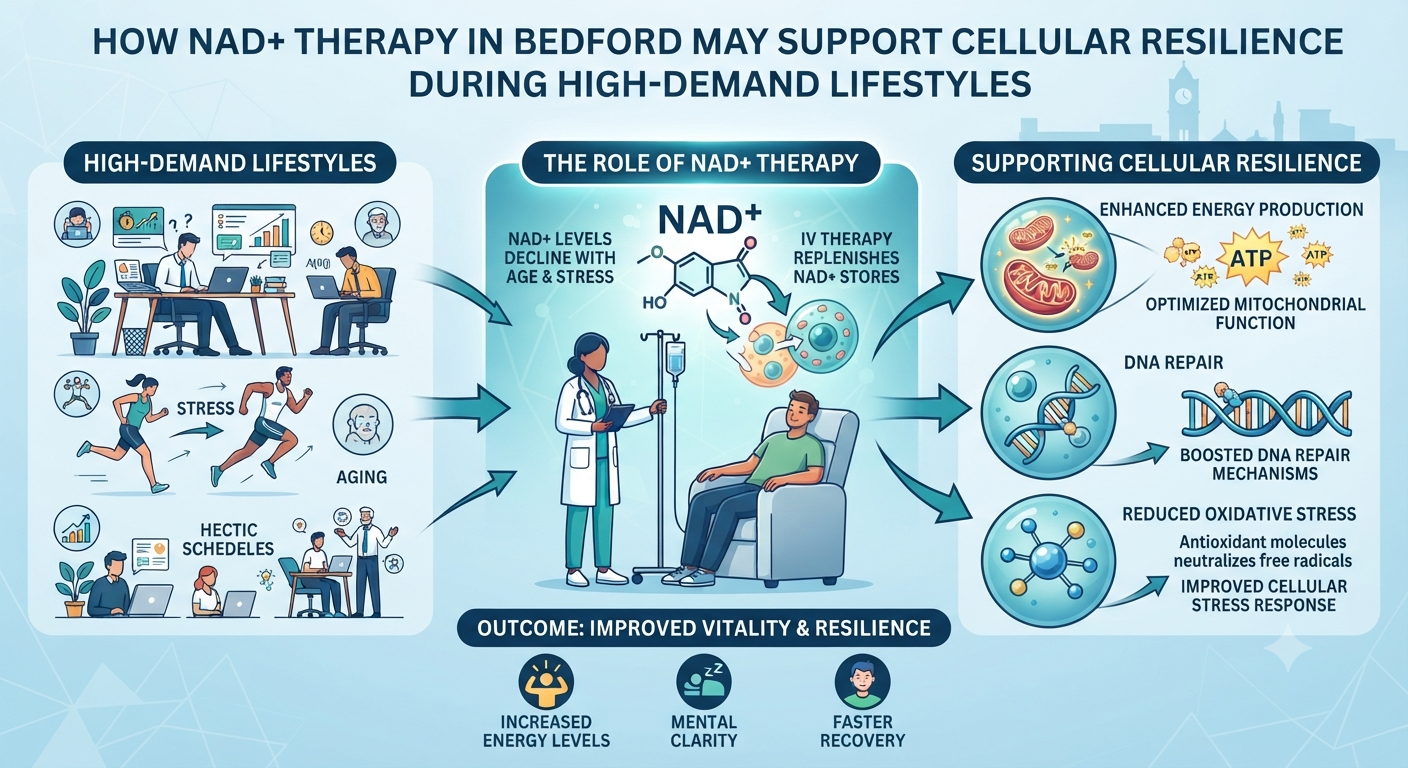
Modern lifestyles can place considerable demands on the body, particularly when work, training, travel, family responsibilities, and social commitments overlap. Feeling tired after a demanding day is normal, but persistent fatigue can sometimes make it difficult to maintain focus, physical performance, and everyday productivity. Cellular resilience refers to the body’s ability to respond to stress, maintain normal cellular processes, and recover from everyday physiological demands. NAD+, short for nicotinamide adenine dinucleotide, is a naturally occurring coenzyme involved in several essential cellular processes. Because NAD+ participates in energy metabolism and cellular signaling, interest in NAD+ therapies has grown among people looking for wellness approaches that go beyond simply addressing temporary tiredness. At Coastal Sports And Wellness, we take a comprehensive approach to wellness and recognize that sustainable performance involves supporting the body’s underlying physiological processes rather than focusing on energy alone.
What Is NAD+ and Why Does It Matter?
NAD+ is present throughout the body’s cells and plays an important role in converting nutrients into usable cellular energy. It also participates in redox reactions, which are fundamental to normal metabolism and the maintenance of cellular function. NAD+ is involved in processes associated with DNA repair, cellular communication, and the activity of certain proteins called sirtuins. NAD+ levels naturally change with age and may also be influenced by metabolic demands, lifestyle factors, and other aspects of physiology. These characteristics have made NAD+ an area of ongoing scientific interest, particularly in research involving aging, metabolism, neurological function, and cellular stress responses. It is important to understand that NAD+ therapy is not a universal solution for fatigue or performance concerns, and current research continues to investigate which applications have meaningful clinical benefits.
Why High-Demand Lifestyles Can Challenge Recovery
A high-demand lifestyle is not limited to professional athletes or people following intensive exercise programs. Entrepreneurs, healthcare professionals, shift workers, frequent travelers, parents, students, and physically active individuals can all experience periods when the demands placed on their bodies exceed their usual recovery capacity. Exercise creates physiological stress that requires appropriate recovery, while inadequate sleep, prolonged work hours, travel, and inconsistent nutrition can add additional demands. When several of these factors occur simultaneously, people may notice changes in concentration, motivation, exercise tolerance, or their general sense of well-being. These experiences do not necessarily indicate a problem with NAD+ levels, and they can have many possible causes. Nevertheless, understanding cellular metabolism can provide useful context for why recovery, nutrition, sleep, hydration, and appropriate wellness strategies all matter when maintaining performance over the long term.
The Connection Between NAD+ and Cellular Energy
One reason NAD+ has attracted attention is its central role in cellular energy production. Within mitochondria, NAD+ participates in metabolic reactions that help transfer electrons and ultimately support the production of ATP, the primary energy currency used by cells. This does not mean that receiving NAD+ automatically produces a noticeable surge of energy, because the relationship between cellular metabolism and how a person feels is considerably more complex. Energy levels are influenced by sleep quality, nutrition, physical activity, stress, hormones, underlying health conditions, medications, and numerous other factors. NAD+ is one component of a much larger biological system that allows cells to function efficiently. Research into NAD+ metabolism is therefore particularly interesting because it explores how cellular pathways may respond to changing physiological demands rather than treating energy as a simple matter of stimulation.
NAD+ and the Concept of Cellular Stress
Cells continuously encounter different forms of physiological stress, including metabolic demands associated with exercise and normal daily activity. NAD+ participates in several pathways that help cells respond to these demands and maintain essential functions. Research has examined NAD+-dependent enzymes and their relationships with processes such as DNA maintenance, mitochondrial activity, and cellular signaling. These mechanisms have contributed to growing interest in NAD+ as a potential component of strategies designed to support healthy cellular function. However, laboratory findings do not automatically translate into proven benefits from NAD+ therapy in every person. We believe it is important to distinguish promising biological research from established clinical outcomes, especially when discussing therapies intended for wellness, recovery, or performance support.
Why Bedford Residents May Consider NAD+ Therapy
People living and working in Bedford can have lifestyles that demand sustained physical and mental engagement throughout the week. Professionals may move between demanding work schedules and family responsibilities, while athletes and recreationally active individuals may combine training with busy careers and personal commitments. Frequent travel and irregular schedules can make consistent recovery habits more difficult to maintain. NAD+ therapy may be considered by some individuals as part of a broader wellness strategy when they are interested in supporting cellular processes alongside established healthy habits. The goal should not be to replace sleep, balanced nutrition, hydration, movement, or appropriate medical care. Instead, any NAD+ approach should be considered within the wider context of an individual’s lifestyle, health history, goals, and professional guidance.
NAD+ Therapy and Athletic Recovery
Physical training creates a series of adaptations that depend heavily on recovery. Muscles, connective tissues, the nervous system, and metabolic pathways all require time and resources to respond to exercise and return toward baseline. NAD+ is relevant to this conversation because of its involvement in mitochondrial metabolism and cellular signaling, although evidence specifically demonstrating improved athletic recovery from NAD+ therapy remains an evolving area of research. Athletes should therefore avoid viewing NAD+ as a substitute for structured training, adequate calories, sufficient protein, hydration, sleep, and appropriate rest days. A responsible wellness approach considers the complete recovery environment rather than focusing on a single intervention. At Coastal Sports And Wellness, we view cellular wellness as one part of a broader framework designed to help individuals make informed decisions about their health and performance goals.
Supporting Mental and Physical Demands Together
High-demand lifestyles often create overlapping physical and cognitive challenges. Someone may complete a demanding workout, spend several hours concentrating at work, manage family responsibilities, and still need to maintain focus late into the evening. NAD+ has biological roles in cellular metabolism and neurological processes, which has contributed to scientific interest in its potential relevance to cognitive and neurological health. However, research into these applications is still developing, and NAD+ therapy should not be presented as a guaranteed method for improving concentration, memory, mood, or mental performance. Individuals experiencing persistent cognitive fatigue should consider whether sleep problems, nutritional deficiencies, stress, medications, or an underlying health condition could be contributing to their symptoms. A thoughtful assessment can help ensure that wellness interventions complement rather than obscure the underlying factors affecting daily function.
The Importance of a Personalized Approach
There is no single wellness protocol that is appropriate for everyone. Age, activity level, nutrition, sleep patterns, medical history, medications, hydration status, and personal objectives can all influence whether a particular therapy is appropriate. Before considering NAD+ therapy, individuals should discuss their circumstances with a qualified healthcare professional who can evaluate potential benefits, limitations, contraindications, and alternatives. It is also important to clarify what outcome the person hopes to achieve, because a concern described as low energy could have many different explanations. Personalized care can help distinguish between supporting general wellness and addressing a medical issue that requires a different type of evaluation. Our approach is centered on informed decision-making, individualized considerations, and realistic expectations rather than promising a specific result from NAD+ therapy.
NAD+ Therapy Should Complement Healthy Foundations
Cellular resilience cannot be created by one treatment alone. Consistent sleep provides the body with critical opportunities for restoration, while adequate nutrition supplies the substrates required for metabolism and tissue maintenance. Regular movement supports cardiovascular health, metabolic function, muscle capacity, and overall physical conditioning. Hydration and stress management also contribute to the body’s ability to cope with everyday demands. NAD+ therapy, when considered appropriate, should therefore be viewed as a potential complementary component of a broader wellness plan rather than a replacement for foundational health behaviors. Building those foundations first creates a stronger framework for evaluating whether an additional therapy has a meaningful role in an individual’s overall strategy.
Understanding What NAD+ Therapy Can and Cannot Do
Interest in NAD+ has grown rapidly, but enthusiasm should be balanced with an understanding of the current evidence. NAD+ has clear and important biological functions, yet the clinical effectiveness of NAD+ supplementation or infusion therapies for specific wellness outcomes is still being investigated. Claims about reversing aging, dramatically increasing energy, or treating numerous unrelated conditions can go beyond what current evidence supports. A responsible conversation should focus on established biology, emerging research, individual suitability, and realistic expectations. People should also understand that experiencing fatigue does not automatically mean that they need NAD+ therapy. By approaching the therapy through an evidence-informed lens, individuals can make decisions based on their actual circumstances instead of relying on exaggerated promises.
Building a Sustainable High-Performance Lifestyle
Long-term performance depends on the ability to repeatedly meet demands while allowing sufficient time for recovery. Whether someone is training for an athletic event, managing a demanding career, or simply trying to maintain consistent energy throughout a busy schedule, sustainability is more valuable than short-term intensity. Cellular metabolism is one part of that equation, but it operates within a much larger network involving sleep, nutrition, exercise, stress, hydration, and overall health. NAD+ therapy may have a place within an individualized wellness strategy for some people, particularly when the potential benefits and limitations have been discussed appropriately. The objective should be to create a sustainable system that supports normal physiological function rather than searching for a quick solution to every period of fatigue. Coastal Sports And Wellness emphasizes this broader perspective because meaningful wellness is ultimately about helping people build routines and strategies that can support their goals over time.
Taking a Thoughtful Next Step
For Bedford residents interested in NAD+ therapy, the most useful first step is to understand what they are trying to accomplish and why they are considering the therapy. Someone seeking better recovery may need a different strategy from someone concerned about persistent fatigue, while an active individual may have nutritional or training factors that should be addressed first. Discussing goals, lifestyle patterns, health considerations, and expectations with an appropriately qualified professional can provide a clearer foundation for making decisions. NAD+ therapy is an area of continuing scientific research, and its potential role in supporting cellular resilience should be considered carefully rather than marketed as a guaranteed performance or energy solution. When incorporated responsibly, it may serve as one component of a broader approach to wellness that prioritizes informed choices and sustainable habits. For people exploring options in Bedford, Coastal Sports And Wellness can provide a setting for discussing wellness goals and determining whether NAD+ therapy fits within a personalized approach to supporting an active, high-demand lifestyle.