The Connection Between Spinal Mobility and Breathing Mechanics: A Bedford Chiropractic Perspective
Understanding the Relationship Between the Spine and Breathing
Breathing is often considered a function controlled primarily by the lungs, but effective respiration depends on coordinated movement throughout the body. The spine, ribs, diaphragm, abdominal muscles, and other structures work together to create the changes in pressure required for comfortable and efficient breathing. When spinal mobility is restricted, the movement available to the rib cage and surrounding tissues can also become limited. This may influence how deeply or comfortably a person breathes, particularly during exercise or sustained physical activity. Understanding this relationship can provide a broader perspective on why mobility, posture, and breathing mechanics are often addressed together in chiropractic and sports wellness care. At Coastal Sports And Wellness, we consider the interaction between spinal movement, posture, and physical function when developing an appropriate approach for each individual.
How the Spine Supports Normal Breathing Mechanics
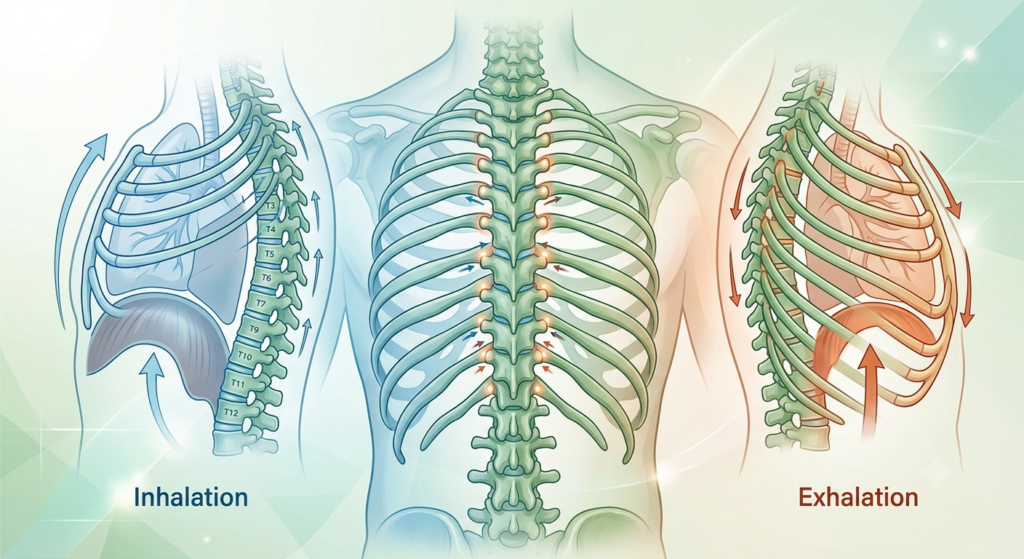
The thoracic spine plays an especially important role in breathing because it connects with the ribs and forms part of the structural framework surrounding the lungs. During inhalation, the ribs need to move upward and outward while the diaphragm contracts and moves downward to help expand the thoracic cavity. The thoracic vertebrae and associated joints must accommodate this movement rather than remaining unnecessarily restricted. When mobility in this region is reduced, the rib cage may not move as freely as it otherwise could. This does not necessarily mean that a spinal restriction directly causes a breathing disorder, but it can contribute to altered movement patterns and muscular compensation. Improving appropriate spinal and thoracic mobility may therefore support more coordinated movement during breathing and physical activity.
The Role of the Thoracic Spine and Rib Cage
The thoracic spine consists of twelve vertebrae that connect with the ribs, creating a functional relationship between spinal movement and rib cage mechanics. Each breath involves subtle movement through this region, even though the motion may not be consciously noticeable. Flexion, extension, rotation, and lateral movement of the thoracic spine can influence how the ribs move during respiration. If these movements become limited through prolonged sitting, repetitive activities, muscular tension, previous injuries, or habitual posture, the surrounding tissues may compensate. Some people may begin relying more heavily on accessory breathing muscles around the neck and shoulders rather than allowing the diaphragm and rib cage to contribute efficiently. Addressing mobility restrictions and movement habits can help create conditions for more balanced breathing mechanics.
Why Posture Can Influence Breathing
Posture is another important consideration when examining the relationship between spinal mobility and respiration. Spending long periods in a slouched sitting position can place the thoracic spine in sustained flexion and may alter the resting position of the rib cage and shoulder girdle. In this position, the diaphragm and other respiratory structures may not operate within the same mechanical environment as they would with a more neutral posture. The body can still maintain breathing, but the strategy used to achieve each breath may change. Over time, individuals may develop habitual patterns that involve excessive movement through the upper chest, neck, or shoulders. We often consider posture alongside mobility because restoring movement without addressing the habits that limit that movement may provide only a temporary improvement.
The Diaphragm and Its Relationship With the Trunk
The diaphragm is the primary muscle of respiration, and its movement is closely connected to the mechanics of the trunk. When the diaphragm contracts during inhalation, it moves downward and contributes to an increase in the volume of the thoracic cavity. The abdominal contents and surrounding structures must accommodate this movement, making breathing a whole trunk activity rather than an isolated action of the lungs. The position and movement of the spine, pelvis, ribs, and abdominal wall can therefore influence the environment in which the diaphragm functions. Restrictions or poor coordination in one area can encourage compensatory strategies elsewhere. For this reason, breathing mechanics may be considered as part of a broader assessment of movement and functional performance.
Spinal Rotation and Rib Movement
Rotation is one of the most important thoracic movements when considering functional mobility and breathing. The ribs are connected to the thoracic vertebrae through joints that allow controlled movement as the chest expands and contracts. If thoracic rotation is restricted, rib movement may become less symmetrical or require additional muscular effort. This can be particularly noticeable in activities that require repeated trunk rotation, such as swimming, golf, tennis, rowing, and certain forms of strength training. Limited rotation can also affect how efficiently the upper body transitions between different positions. Appropriate mobility work may help improve the quality and coordination of these movements while supporting the body’s natural breathing pattern.
Breathing Mechanics During Exercise
The relationship between spinal mobility and breathing becomes particularly relevant during exercise because respiratory demand increases as physical intensity rises. Athletes and active individuals need to coordinate breathing with movement while maintaining posture, stability, and force production. A restricted thoracic region may make certain positions feel less comfortable or encourage excessive movement through the neck and shoulders. When this occurs, the person may perceive breathing as more effortful even when cardiovascular capacity is not the primary limitation. Movement assessments can help identify whether mobility restrictions, poor trunk control, or inefficient movement strategies are contributing to the overall pattern. Our approach is to look at the complete movement system rather than treating breathing or spinal mobility as completely separate concerns.
Why Athletes May Notice the Difference
Athletes frequently place significant demands on the spine, rib cage, and surrounding musculature. Repetitive training can create areas of stiffness, especially when an athlete performs the same movements frequently without sufficient mobility work or recovery. A runner may experience trunk stiffness that affects arm swing and posture, while a swimmer may notice restrictions during thoracic rotation and shoulder movement. A field or court athlete may also need considerable thoracic mobility to rotate, accelerate, decelerate, and change direction efficiently. Breathing must continue throughout these movements, meaning respiratory mechanics and musculoskeletal coordination operate simultaneously. By considering these connections, we can help active individuals understand how mobility and movement quality may contribute to their overall performance.
Breathing and Core Stability
Breathing also interacts closely with core stability because the diaphragm, abdominal wall, pelvic floor, and spinal muscles contribute to pressure management within the trunk. Core stability does not simply mean keeping the abdominal muscles permanently tight. Effective stability requires the trunk to adapt to movement while allowing appropriate breathing to continue. Excessive bracing can sometimes make breathing feel restricted, while insufficient control may reduce the body’s ability to transfer force effectively. Coordinating breathing with spinal and pelvic movement can therefore be important during strength training and functional activities. A balanced approach considers both mobility and stability rather than assuming that greater stiffness is always beneficial.
How Restricted Mobility Can Change Movement Strategies
When one part of the body does not move adequately, another area often has to compensate. This principle is particularly relevant to the thoracic spine because it sits between the cervical spine and shoulders above and the lumbar spine and pelvis below. If thoracic rotation is limited, an individual may generate additional movement through the lower back or shoulders when performing a rotational task. Similarly, restricted extension may encourage excessive movement through other parts of the spine during reaching or overhead activities. These compensations can change how forces are distributed throughout the body. Identifying these patterns can help guide a more targeted approach to mobility, movement retraining, and physical conditioning.
Chiropractic Care and Spinal Mobility
Chiropractic care may include assessment and management of spinal and joint mobility when appropriate for an individual’s presentation. Depending on the findings, care may involve manual techniques, mobility exercises, posture education, movement retraining, and recommendations for modifying contributing activities. The objective is not simply to make the spine move more, because mobility must be appropriate to the person’s needs and functional demands. A movement assessment can help determine whether a particular region is restricted, unstable, painful, or simply adapting to another limitation elsewhere. At Coastal Sports And Wellness, we use this broader perspective to understand how spinal movement relates to everyday function and physical performance. Any treatment approach should be individualized according to the person’s symptoms, goals, medical history, and assessment findings.
Breathing Awareness as Part of Movement Training
Breathing awareness can be incorporated into movement training without turning every exercise into a respiratory exercise. Simple attention to the timing and quality of inhalation and exhalation can help individuals recognize unnecessary tension through the neck, shoulders, or trunk. During mobility exercises, controlled breathing may also help a person move gradually into a position without excessive muscular guarding. In strength training, breathing can be coordinated with the demands of the exercise while maintaining appropriate trunk control. These strategies are not intended to replace medical evaluation for respiratory symptoms, but they can complement movement-focused care when breathing mechanics are part of a broader musculoskeletal concern. Consistent practice can help individuals become more aware of how breathing and movement interact during daily activities and exercise.
When Spinal Mobility Deserves Attention
Not every limitation in spinal mobility requires professional treatment, and normal variation exists between individuals. However, persistent stiffness, discomfort with movement, recurring restrictions, or noticeable differences between sides may warrant an assessment. The same applies when changes in movement are interfering with exercise, work, sleep, or everyday activities. Breathing that becomes unusually difficult, painful, or restricted should always be evaluated appropriately because respiratory symptoms can have causes unrelated to spinal mobility. Chiropractic assessment can help determine whether musculoskeletal factors appear to be contributing to a person’s movement pattern. If another type of evaluation is more appropriate, a responsible practitioner should also recognize when referral to another healthcare professional is necessary.
Creating a More Functional Approach to Mobility
Improving spinal mobility is most useful when the increased movement translates into better function. Mobility exercises should therefore be selected according to the individual’s activities, physical demands, movement limitations, and goals. Someone who spends most of the day at a desk may need a different strategy from a competitive athlete who repeatedly performs high-speed rotational movements. Breathing can be incorporated into these exercises to encourage relaxed and coordinated movement without forcing a particular breathing pattern. Strength, motor control, recovery, ergonomics, and physical conditioning may also need to be considered. This comprehensive approach helps ensure that mobility is treated as part of overall movement quality rather than as an isolated flexibility target.
Supporting Better Movement in Bedford
Understanding the connection between spinal mobility and breathing mechanics can provide useful insight into how the body manages posture, movement, exercise, and physical demand. The thoracic spine and rib cage need sufficient mobility to participate in normal respiratory movement, while the diaphragm and trunk muscles need appropriate coordination to support efficient breathing. Restrictions do not automatically indicate a serious problem, but persistent limitations or movement changes may be worth discussing with a qualified healthcare professional. Our goal is to assess the individual rather than assume that the same mobility or breathing strategy will work for everyone. At Coastal Sports And Wellness, we focus on practical, individualized care that considers how the spine, joints, muscles, posture, and movement patterns work together. By taking this whole-body perspective, we can help Bedford residents make informed decisions about their mobility, physical performance, and long-term movement health.