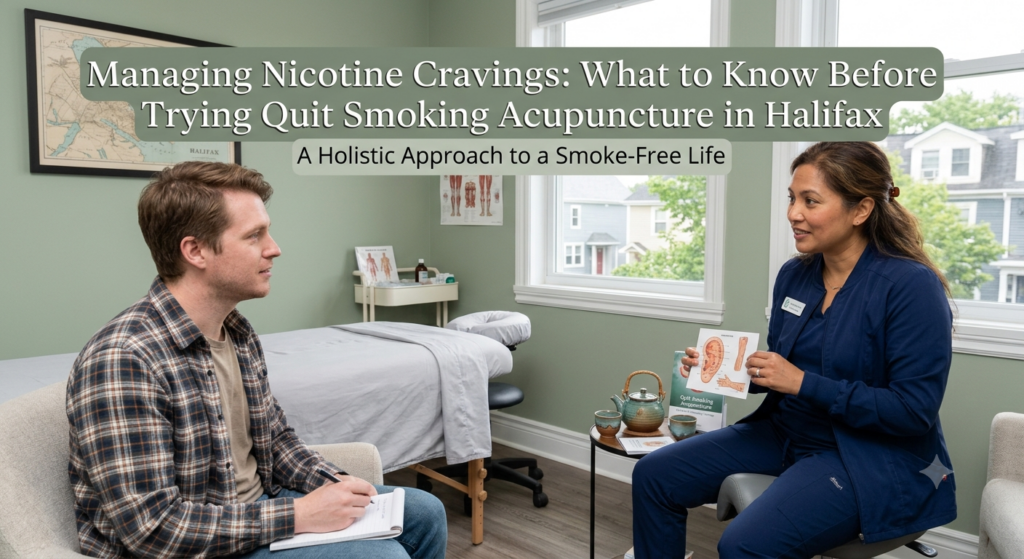
Managing Nicotine Cravings: What to Know Before Trying Quit Smoking Acupuncture in Halifax
Understanding Why Nicotine Cravings Occur
Quitting smoking is an important step toward improving overall health, but managing nicotine cravings can make the process challenging for many people. Nicotine affects the brain’s reward system, creating a cycle in which the body becomes accustomed to regular nicotine exposure. When someone stops smoking or reduces nicotine intake, withdrawal symptoms may develop as the body adjusts to functioning without it. These symptoms can include irritability, restlessness, difficulty concentrating, sleep disturbances, and a persistent urge to smoke. Certain situations, such as drinking coffee, finishing a meal, experiencing stress, or spending time with other smokers, can also trigger cravings even when the physical effects of withdrawal begin to ease. Understanding these physical and behavioural factors can help people prepare for the quitting process and explore supportive approaches, including quit smoking acupuncture in Halifax.
Recognising the Difference Between Physical and Emotional Cravings
Nicotine cravings can develop for different reasons, and recognising their underlying causes can make them easier to manage. Physical cravings are associated with nicotine dependence and the body’s response to reduced nicotine intake. Emotional and behavioural cravings are often connected to routines, familiar environments, and feelings that have become associated with smoking over time. For example, someone who regularly smokes during work breaks may automatically reach for a cigarette when stepping outside, even if the original nicotine withdrawal has become less intense. Stress, boredom, frustration, and social situations can also reinforce these learned associations. By identifying personal triggers and understanding how they influence smoking behaviour, individuals can develop more practical strategies to respond to cravings and maintain progress toward becoming smoke-free.
How Quit Smoking Acupuncture in Halifax Fits Into a Smoking Cessation Plan
Acupuncture is a complementary therapy that involves inserting very thin needles into specific points on the body. Some people explore acupuncture while attempting to quit smoking because they are interested in relaxation, stress management, and additional support during a challenging lifestyle transition. When considering quit smoking acupuncture in Halifax, it is important to understand the role this treatment may play within a broader smoking cessation plan. Acupuncture should not be presented as a guaranteed method of eliminating nicotine dependence, and scientific evidence has not established that it reliably improves long-term smoking cessation rates. Nevertheless, some individuals value complementary therapies as part of a structured approach that also addresses withdrawal symptoms, behavioural triggers, and the emotional challenges of quitting. At Coastal Sports And Wellness, we encourage people to make informed decisions about complementary wellness services and consider how these options fit alongside evidence-based smoking cessation support.
What to Expect During an Acupuncture Appointment
Before beginning acupuncture, a practitioner should discuss your health history, current concerns, treatment expectations, and any relevant medical considerations. This initial conversation helps establish whether acupuncture is an appropriate complementary service for your circumstances and provides an opportunity to ask questions about the procedure. Depending on the practitioner’s approach, the appointment may involve the use of fine, sterile, single-use needles at selected points on the body. Some people experience mild sensations such as tingling, warmth, or temporary tenderness, while others notice very little discomfort. The practitioner should explain the process, follow appropriate hygiene and safety procedures, and invite you to communicate any discomfort during treatment. If you are considering acupuncture to support a smoking cessation attempt, ask what the service involves, what outcomes are realistic, how progress will be assessed, and whether additional support should be incorporated into your plan.
Can Acupuncture Help With Stress During Nicotine Withdrawal?
Stress can make quitting smoking feel more difficult because many smokers have come to associate cigarettes with relaxation or relief from uncomfortable emotions. However, the perceived relief from smoking may partly reflect the temporary easing of nicotine withdrawal rather than a lasting reduction in the underlying source of stress. When nicotine intake decreases, feelings of tension and irritability may initially increase as the body adjusts. Some people investigate acupuncture because they hope it will help them relax or manage the discomfort associated with changing established habits. Although acupuncture may provide a relaxing experience for some individuals, current evidence does not establish it as a reliable treatment for nicotine withdrawal or a proven way to prevent smoking relapse. Combining appropriate professional guidance with practical stress management techniques can provide a more comprehensive approach to navigating this period of adjustment.
Practical Ways to Manage Nicotine Cravings Between Appointments
Preparing for cravings before they occur can help make the quitting process more manageable. When an urge to smoke develops, consider delaying the decision to smoke for a few minutes while allowing the craving to rise and gradually subside. Drinking water, taking a short walk, practising slow breathing, or moving to a different environment may help interrupt the usual smoking routine. Keeping your hands occupied with an everyday activity and choosing alternatives to familiar smoking breaks can also make a difference. It can be useful to record when cravings occur, how long they last, and what circumstances seem to trigger them, as this information can reveal patterns that are easier to address with preparation. These techniques are not guaranteed to eliminate cravings, but practising them consistently can help build confidence and provide practical alternatives when the urge to smoke becomes difficult to ignore.
Considering Evidence-Based Support Alongside Acupuncture
Anyone planning to quit smoking should understand the benefits of established smoking cessation treatments before relying on complementary therapies alone. Behavioural counselling can help people identify triggers, develop coping strategies, and prepare for situations that might otherwise lead to smoking again. Nicotine replacement therapy, including patches, gum, lozenges, and other appropriate formulations, can help reduce withdrawal symptoms by delivering nicotine without the harmful smoke produced by burning tobacco. Prescription medications may also be suitable for some individuals, depending on their medical history, preferences, and clinical circumstances. A healthcare professional or pharmacist can explain which options are appropriate and how different approaches may be combined safely. Acupuncture may be considered as an additional wellness service if desired, but it should not replace proven cessation treatments or delay access to professional support.
Preparing Your Body and Environment for Quitting
A successful smoking cessation plan involves more than managing the occasional urge to smoke. Preparing your environment can reduce exposure to familiar cues and make it easier to establish healthier routines during the first weeks without cigarettes. Removing cigarettes, lighters, and ashtrays from your immediate surroundings can help limit automatic smoking behaviour. Informing supportive friends or family members about your decision may also create opportunities for encouragement when cravings become difficult. Regular physical activity, consistent sleep routines, balanced meals, and planned activities during previous smoking breaks can help provide structure while your daily habits change. Before exploring quit smoking acupuncture in Halifax, consider how these practical preparations can complement your chosen support options and contribute to a more organised, realistic quitting strategy.
Understanding Withdrawal Timelines and Individual Differences
Nicotine withdrawal does not follow exactly the same pattern for everyone, so it is important to set expectations that reflect individual circumstances. Some people notice cravings within hours of their last cigarette, while others experience changes in mood, concentration, sleep, or appetite over the following days. Withdrawal symptoms are often most intense during the first several days and generally improve over the next few weeks, although occasional cravings can continue much longer. Environmental cues and emotional triggers may remain noticeable even after the most uncomfortable physical symptoms have eased. Factors such as smoking frequency, nicotine dependence, previous quit attempts, stress levels, and the availability of support can influence how someone experiences this transition. Understanding these variations can help people avoid interpreting a difficult day as evidence that quitting is impossible and instead focus on the progress they are making over time.
Setting Realistic Expectations for Complementary Wellness Treatments
It is natural to want a treatment that quickly removes cravings and makes quitting feel straightforward, particularly after previous attempts have been difficult. However, no complementary therapy can guarantee that nicotine withdrawal will disappear or that someone will never experience another urge to smoke. When evaluating acupuncture, look for clear information about the service, the practitioner’s qualifications, potential risks, and the limitations of the available evidence. Be cautious of claims that promise guaranteed results, permanent freedom from cravings after a single session, or successful smoking cessation without any effort or additional support. A realistic approach recognises that quitting involves physical adjustment, changes to established behaviours, and the development of new coping skills. Coastal Sports And Wellness encourages informed conversations about wellness options so individuals can understand what a service offers without confusing complementary care with established medical treatment.
Choosing a Suitable Quit Smoking Acupuncture Service in Halifax
Choosing a suitable service begins with understanding your personal goals and identifying the type of support you want during your smoking cessation journey. Ask whether the practitioner has appropriate training, follows recognised hygiene standards, and explains the possible benefits and limitations of acupuncture clearly. It is also helpful to discuss your expectations before booking, particularly if you hope treatment will reduce stress or help you manage cravings. If you have a bleeding disorder, take blood-thinning medication, have a weakened immune system, or are pregnant, discuss these circumstances with an appropriate healthcare professional and the practitioner before proceeding. Make sure you understand the proposed treatment schedule, associated costs, and how acupuncture would fit into any existing smoking cessation plan. Taking time to evaluate these considerations can help you make a more informed decision about whether complementary acupuncture services align with your needs and preferences.
Moving Forward With a More Sustainable Smoking Cessation Plan
Quitting smoking is a process that often requires preparation, patience, and a willingness to adjust your approach when challenges arise. Managing nicotine cravings becomes more achievable when you understand your triggers, practise alternative responses, and have access to suitable support. Although acupuncture may appeal to people seeking a complementary wellness experience, the evidence does not support relying on it as a stand-alone method for achieving long-term smoking cessation. Combining behavioural strategies with established treatments, professional guidance, and encouragement from trusted people can provide a stronger foundation for lasting change. If a smoking lapse occurs, it can be useful to identify what triggered it and revise your plan rather than treating the experience as a complete failure. Coastal Sports And Wellness supports a thoughtful approach to personal wellbeing, helping people explore suitable wellness services while recognising the importance of realistic expectations and informed healthcare decisions.
Frequently Asked Questions About Quit Smoking Acupuncture in Halifax
Does acupuncture stop nicotine cravings immediately?
Acupuncture has not been shown consistently to eliminate nicotine cravings immediately or produce reliable long-term smoking cessation. Some people may find a session relaxing, but individual experiences vary, and relaxation should not be interpreted as proof that nicotine dependence has been treated. Cravings can still occur after an appointment, particularly when someone encounters familiar smoking triggers or experiences withdrawal symptoms. Developing a practical coping plan and discussing evidence-based treatment options with a healthcare professional can help address these challenges. Anyone considering acupuncture should approach it as a complementary option rather than a guaranteed solution.
How many acupuncture sessions are needed to quit smoking?
There is no scientifically established number of acupuncture sessions that guarantees successful smoking cessation. Treatment frequency may vary according to the practitioner’s approach and the individual’s preferences, but more sessions do not necessarily mean a greater likelihood of remaining smoke-free. Before committing to a course of treatment, ask about the recommended schedule, costs, expected outcomes, and how progress will be evaluated. It is also important to consider whether behavioural counselling or medication could provide more effective support for nicotine withdrawal. Your plan should be based on informed decisions rather than promises of a specific result.
Is acupuncture safe for people trying to stop smoking?
Acupuncture is generally considered low risk when performed by a suitably qualified practitioner using sterile, single-use needles, although temporary soreness, minor bleeding, and bruising can occur. More serious complications are possible, particularly when treatment is performed incorrectly or appropriate precautions are not followed. People with certain medical conditions, those taking blood-thinning medication, and pregnant individuals should discuss relevant circumstances with a healthcare professional before treatment. Acupuncture should also be coordinated with any existing medical care when appropriate. Asking questions about qualifications, hygiene, contraindications, and treatment procedures can help you make a safer, more informed choice.
What is the most effective way to manage nicotine cravings?
For many people, the most effective approach combines behavioural support with appropriate smoking cessation medication or nicotine replacement therapy. Counselling can help address habitual smoking patterns, while medication can reduce withdrawal symptoms and make cravings easier to manage. Simple techniques such as delaying a cigarette, changing environments, practising breathing exercises, and seeking support during difficult moments may also be useful. A healthcare professional or pharmacist can help identify options that suit your needs and medical circumstances. Complementary approaches such as acupuncture can be discussed as optional additions, provided they do not replace effective cessation support.
Where should I begin if I want to quit smoking in Halifax?
Start by choosing a realistic quit date, identifying your main smoking triggers, and considering the support you may need during withdrawal. A healthcare professional or pharmacist can help you compare counselling, nicotine replacement therapy, and prescription options where appropriate. If you are interested in quit smoking acupuncture in Halifax, research the service carefully and ask about practitioner qualifications, safety procedures, costs, and realistic expectations. Prepare your home and daily routine to reduce smoking cues, and let trusted people know how they can support your decision. With a clear plan and appropriate assistance, you can take practical steps toward a smoke-free life while adapting your strategy to the challenges you encounter.